Where Intel is in REAL Trouble... - AMD EPYC Server Upgrade
0 up · 0 down · 0 ratings
Description
Get an unrestricted 30-day free trial of FreshBooks at freshbooks.com
Promos
Check out Seasonic products: On Amazon: geni.us On NewEgg: lmg.gg Our editing server is in dire need of an upgrade, and let's just say that this one is going to be EPYC... Buy AMD EPYC Rome processors on Amazon (PAID LINK): geni.us Buy Intel P4500 on Amazon (PAID LINK): geni.us Buy Crucial 32GB DDR4-2933 on Amazon (PAID LINK): geni.us Gigabyte EPYC server: gigabyte.com Purchases made through some store links may provide some compensation to Linus Media Group. Discuss on the forum: linustechtips.com Our Affiliates, Referral Programs, and Sponsors: lmg.gg Get a Displate Metal Print at lmg.gg Get a 30-day free trial of Amazon Prime at lmg.gg Linus Tech Tips merchandise at lttstore.com Our Test Benches on Amazon: amazon.com Our production gear: geni.us Twitter - twitter.com Facebook - @LinusTech Instagram - @linustech Twitch - twitch.tv Intro Screen Music Credit: Title: Laszlo - Supernova Video Link: youtube.com iTunes Download Link: itunes.apple.com Artist Link: soundcloud.com Outro Screen Music Credit: Approaching Nirvana - Sugar High youtube.com
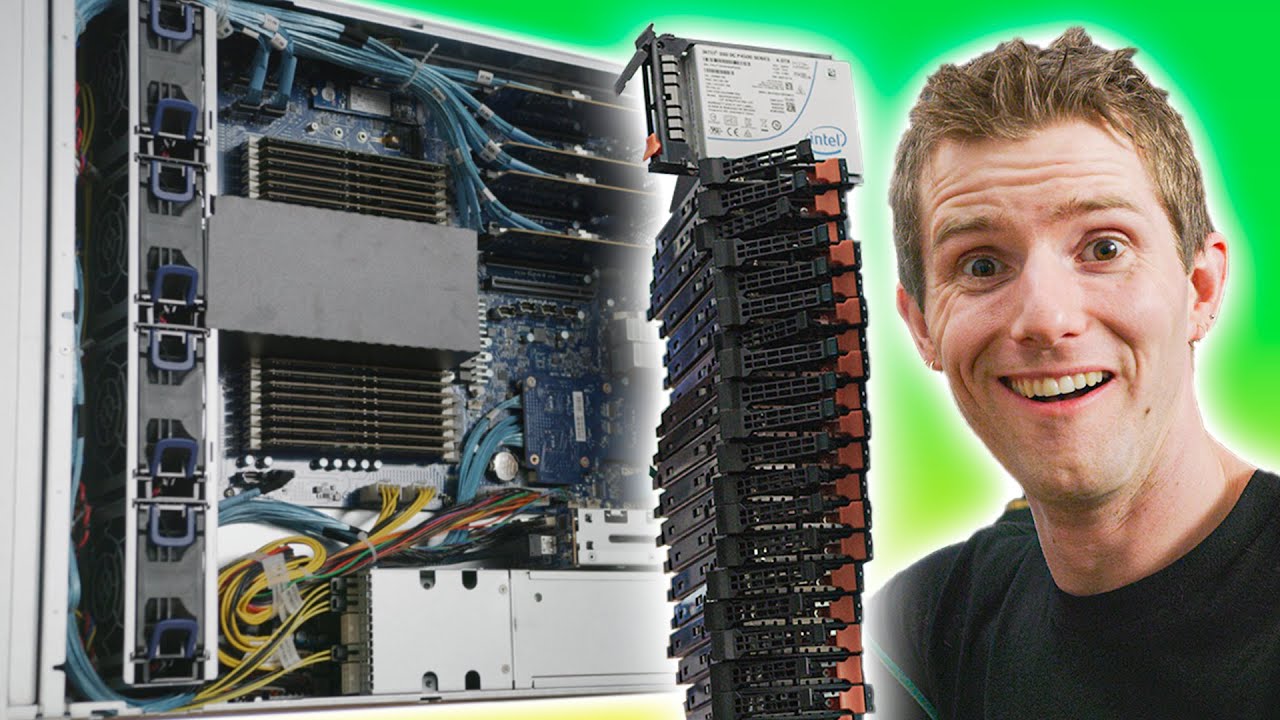
The video documents a major upgrade to Linus Tech Tips’ Wanik server, transforming it into a high density, PCIe Gen 4 capable storage powerhouse. The host explains the motivation for a capacity and performance boost, moving from 1.2 TB drives to 4 TB NVMe drives to support longer-term editing workflows and large data sets. A key focus is the Gigabyte R272 Z32 2U server, chosen for its AMD EPYC Rome compatibility and the ability to attach 24 NVMe drives with dedicated PCIe lanes. The narrative emphasizes the shift from SATA boot and storage paths toward an all-NVMe design, aiming to maximize throughput and reduce latency across the entire system. Throughout the setup, the team highlights practical considerations like redundant power supplies, ample memory, and the importance of PCIe lane budgeting to sustain multiple NVMe devices. The plan also involves evaluating different RAID approaches and how Linux versus Windows behavior affects storage performance and reliability in a high-end editing NAS context. The result is framed as a benchmark of what modern AMD platforms can achieve for a professional-grade server environment, while noting real-world constraints and the need for careful tuning. As the build progresses, the video delves into hardware compatibility challenges and the realities of using AMD EPYC CPUs without a built-in RAID controller. The team discovers that Proxmox with ZFS on Linux reveals kernel-related compatibility issues, which complicates achieving optimal drive performance. They experiment with four independent vdevs in a RAID-Z1 configuration to balance capacity and resiliency, but encounter kernel panics and performance bottlenecks that limit sustained throughput. Attempts to tune Infinity Fabric speeds and memory configurations reveal both the potential and the fragility of the platform when pushed to extreme read/write workloads. The crew collaborates with tech peers to identify that a Linux kernel version and ZFS version combination is at the heart of the issues, leading to a pivot in testing strategies. With software-level hurdles acknowledged, the team runs drive-by-drive benchmarks to isolate bottlenecks and evaluates the impact of different file systems and raid strategies. They demonstrate dramatic read and write speeds in excess of 20–24 GB/s in synthetic tests, a theoretical ceiling that approaches the practical limits of the hardware. The walkthrough includes a candid assessment of the Infinity Fabric interconnect and the need to carefully balance memory bandwidth against stability. The video culminates in a clear, numbers-backed conclusion: the AMD EPYC platform can deliver extraordinary throughput for a NAS-like workload, but achieving consistent real-world performance requires precise hardware and software alignment, plus acceptance of some trade-offs when it comes to RAID hardware integration. In closing, the presenter teases what a future upgrade path might unlock and what lessons can be learned for similar data-center style builds. Overall, the upgrade narrative blends enthusiasm for cutting-edge hardware with practical troubleshooting notes, illustrating both the promise and the complexity of building a world-class editing and storage server. The emphasis on PCIe Gen 4 expansion, large NVMe arrays, and near-the-limit throughput provides a hands-on blueprint for enthusiasts considering similar high-performance builds. The video also foregrounds how collaboration with community peers and manufacturers can illuminate compatibility gaps and drive faster iteration. Finally, the host connects the technical journey to broader themes of scalability, reliability, and the evolving role of ECC memory, servers, and storage in professional media pipelines.
Topics · technology · hardware · servers · storage · data_center