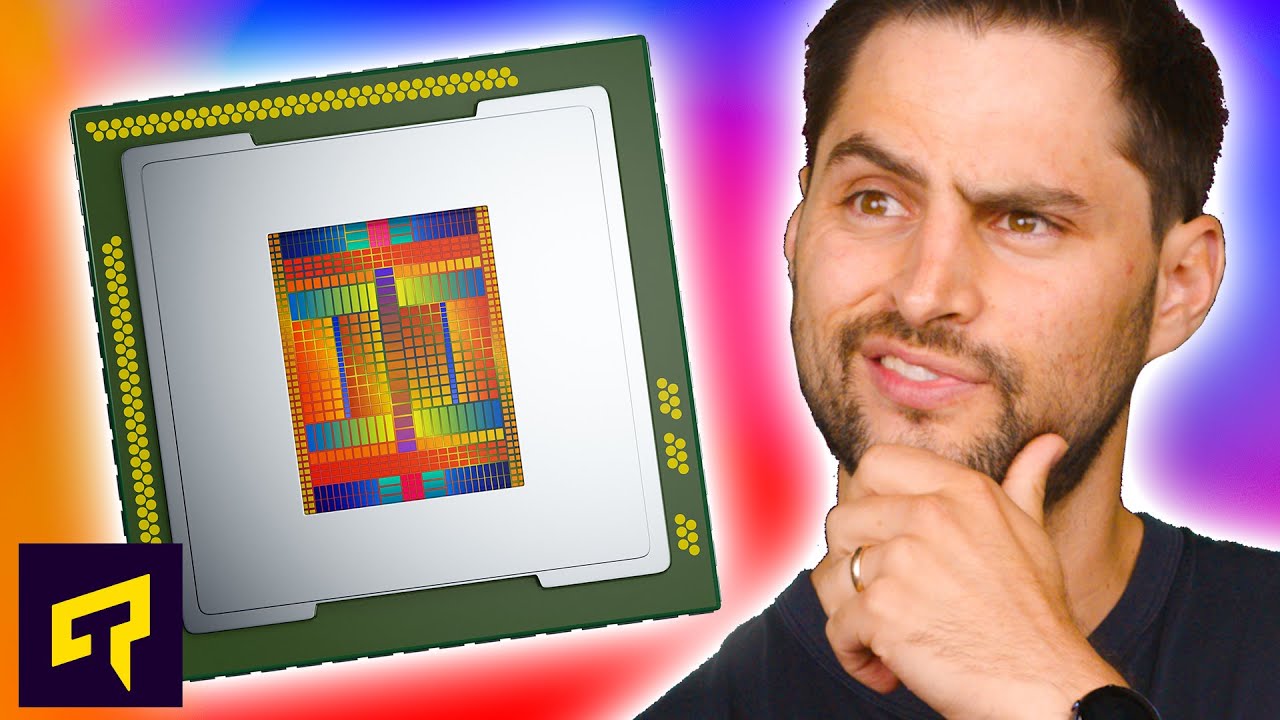
What's Inside A CPU Core?
0 up · 0 down · 0 ratings
Promos
Thanks to Secret Lab for sponsoring today's video! Check them out at lmg.gg Learn how a CPU core works. Leave a reply with your requests for future episodes, or tweet them here: twitter.com ►GET MERCH: lttstore.com ►SUPPORT US ON FLOATPLANE: floatplane.com ►LTX EXPO: ltxexpo.com AFFILIATES & REFERRALS --------------------------------------------------- ►Affiliates, Sponsors & Referrals: lmg.gg ►Private Internet Access VPN: lmg.gg ►MK Keyboards: lmg.gg ►Secretlabs Gaming Chairs: lmg.gg ►Nerd or Die Stream Overlays: lmg.gg ►Green Man Gaming lmg.gg ►Amazon Prime: lmg.gg ►Audible Free Trial: lmg.gg ►Our Gear on Amazon: geni.us FOLLOW US ELSEWHERE --------------------------------------------------- Twitter: twitter.com Facebook: @LinusTech Instagram: @linustech Twitch: twitch.tv FOLLOW OUR OTHER CHANNELS --------------------------------------------------- Linus Tech Tips: lmg.gg Mac Address: lmg.gg TechLinked: lmg.gg ShortCircuit: lmg.gg LMG Clips: lmg.gg Channel Super Fun: lmg.gg Carpool Critics: lmg.gg
This video provides a clear, high level explanation of what a CPU core does and how it differs from the rest of the processor. It starts by debunking common myths, stating that cores do not handle IO or graphics, and then moves into the core’s internal components. The ALU, or arithmetic logic unit, is introduced as the part that handles mathematical and logical operations, while the floating point unit manages numbers with decimal points. Data is fed to these units through registers, including input registers for data and an instruction register that tells the core what to do with that data. The accumulator is presented as a fast internal memory that collects computation results, and the cache is emphasized as crucial for speed, since it holds frequently used data and instructions close to the core. To complete the picture, the lecture explains how instruction flow is managed by an instruction pointer and how a memory management unit (MMU) connects RAM to the cores, with a separate control unit synchronizing everything via a clock signal. The host also notes that the discussion is a simplified overview of a very complex device, acknowledging that deeper exploration would require more time. Overall, the video ties together how a CPU core processes instructions from memory through a sequence of specialized units, culminating in a discussion of why caching and timing matter for real-world performance.
Topics · computing · computer-hardware · cpu-architecture · science-and-technology
Questions answered
- What is the role of the ALU in a CPU core?
- The ALU performs arithmetic and logical operations on data that the core processes.
- What does the cache do for a CPU core?
- The cache stores frequently used data and instructions to reduce access time from RAM and speed up computation.