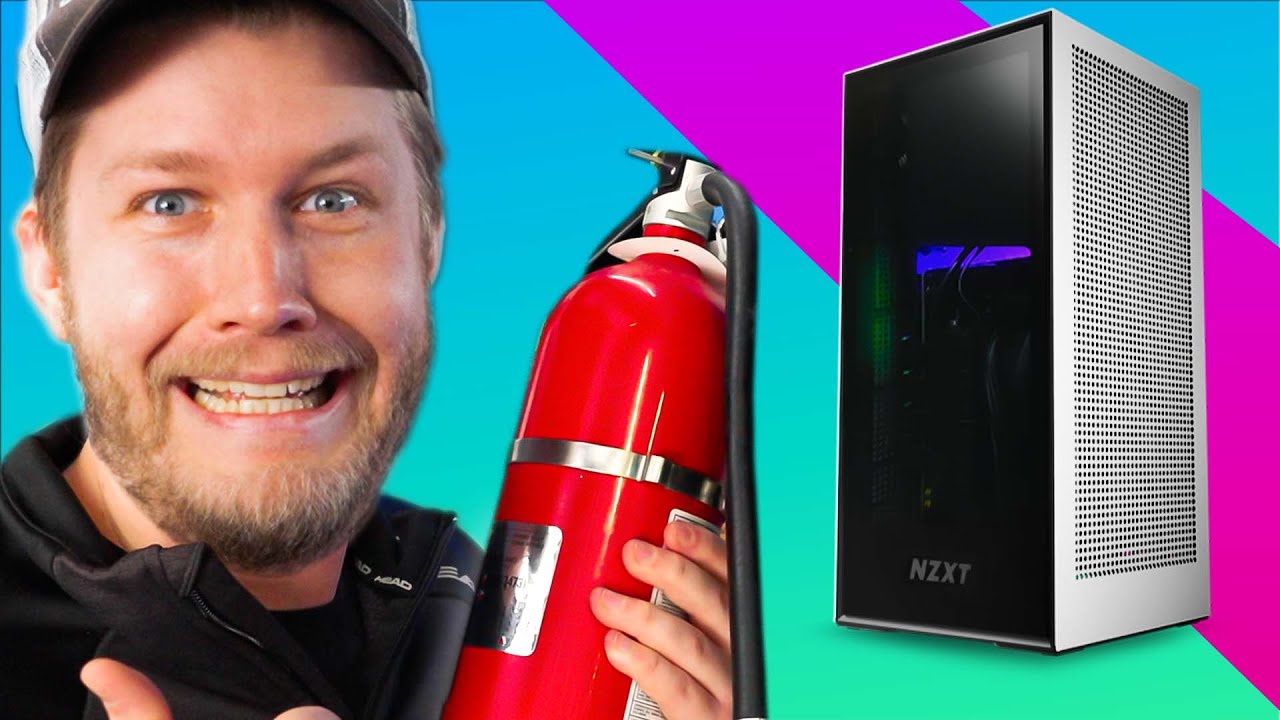
No more FIRES?!? - NZXT H1 V2
0 up · 0 down · 0 ratings
Promos
Check out the NZXT H1 v2 at lmg.gg Buy Intel i7-11700k CPU Amazon: geni.us Best Buy: geni.us Newegg: geni.us Buy ROG Strix Z590-I Gaming WiFi 6E LGA 1200 Amazon: geni.us B&H Photo: geni.us Buy Trident Z Royal DDR4 3600 CL18 (2x16gb) Amazon: geni.us Newegg: geni.us Buy Crucial P5 M.2 500GB Amazon: geni.us Newegg: geni.us Buy ASUS ROG STRIX NVIDIA GeForce RTX 3090 White OC Edition Amazon: geni.us Newegg: geni.us Purchases made through some store links may provide some compensation to Linus Media Group. ► GET MERCH: lttstore.com ► AFFILIATES, SPONSORS & REFERRALS: lmg.gg ► PODCAST GEAR: lmg.gg ► SUPPORT US ON FLOATPLANE: floatplane.com FOLLOW US ELSEWHERE --------------------------------------------------- Twitter: twitter.com Instagram: @shortcircuityt TikTok: @linustech Facebook: @ShortCircuitYT CHAPTERS --------------------------------------------------- 0:00 - Beefcakes needed 0:25 - Unboxing 0:54 - Disassembly 1:26 - Layout impressions 2:03 - Sponsor - Manscaped! 2:25 - Assembly 7:25 - Small form factor PSU thoughts 8:13 - PC build thoughts 8:22 - I/O port placement impressions 8:47 - Powering it on 9:12 - Troubleshooting 9:43 - Full assembly impressions 10:19 - PSU draw impressions 10:54 - Cooling and noise impressions 11:25 - Final thoughts
Channels and socials
Get 20% OFF + Free Shipping @Manscaped at → manscaped.com NZXT's H1 had a rocky lifespan with potential fires due to a faulty design at the PCI-e riser. Well, they fixed it now with the NZXT H1 v2 by designing a new PCI-e riser from the group up, and it's a little bit larger that can fit 3000 series of GPU. So hopefully, this one doesn't spark flames.
The video opens with a lighthearted tease about the physical build of the NZXT H1 V2, highlighting the practical design improvements that address past concerns, such as increased GPU clearance, expanded power supply wattage options, and better cooling. The host walks through the unboxing and disassembly, noting the built‑in power supply concept and the organized cable routing that keeps the compact form factor manageable. The narrative foregrounds the new PCIe riser design, Gen 4 compatibility, and the safety updates intended to prevent the earlier fires that plagued the original H1. Throughout, there is a balance of hands‑on assembly steps, quick checks against the manual, and moments of humor about the quirky quirks of assembling small form factor PCs in tight spaces. The first major takeaway is that the case ships as a semi‑complete package with essential components integrated, which speeds up the build despite the tight internal geometry. The host emphasizes the hope that the new riser and redesigned power delivery mitigate the historical fire risk while enabling support for 30‑series GPUs, such as a 3090 upgrade, within the H1 V2 chassis.
Topics · technology · hardware · pc_building · product_review
Questions answered
- Did NZXT fix the fire risk in the H1 with the V2 design, and how is this achieved?
- Yes, the H1 V2 uses a redesigned PCIe riser and a Gen 4‑friendly, purpose‑built riser assembly to prevent the grounding shorts that caused fires in the earlier version, addressing the previous safety concerns while enabling more GPU clearance and stable power delivery.
- What are the notable hardware changes in the NZXT H1 V2 compared to the original?
- The V2 offers a larger PCIe riser area, improved GPU height and length allowances, a more capable cooling layout with a 92 mm rear fan upgrade option, and integrated power supply design with more flexible cable routing suited to small form factor builds.
- What components were used for a high‑end build inside the H1 V2 in this video, and how did it perform?
- The host tested a high performance configuration including an RTX 3090, i7‑11700K, and a Z590‑based motherboard, showing that the system could sustain substantial power draw (around 600 W total) with temperatures leveling into the upper 70s to low 80s Celsius, while noting noise from the small form factor power supply and potential improvements through fan curve tuning.