Glossy to Brushed Plastic DIY Experiment - Addressing Functionality & Appearance
0 up · 0 down · 0 ratings
Channels and socials
I HATE glossy plastic on my PC parts. I hate it so much, in fact, that I decided I would try to get rid of it for good... Intel link: linustechtips.com Massdrop link: massdrop.com Pricing & discussion: linustechtips.com Support us: linustechtips.com Join our community forum: bit.ly twitter.com @LinusTech Title: Laszlo - Supernova Video Link: youtube.com iTunes Download Link: itunes.apple.com Artist Link: soundcloud.com Title: Televisor - Deluxe Video Link: youtube.com Beatport Download Link: pro.beatport.com Label Channel: youtube.com Outro Screen Music Credit: Approaching Nirvana - Sugar High youtube.com
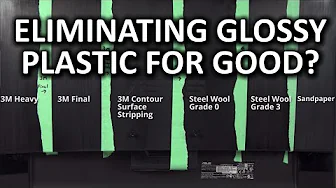
The video presents a hands-on DIY experiment aimed at transforming glossy plastic surfaces into a brushed finish, focusing on both the functionality and the appearance of hardware components. The creator starts by explaining the frustration with glossy plastics on PC parts and outlines a plan to test multiple finishing methods using common abrasive tools. Surfaces chosen for testing include a Nintendo Wii shell, an ASUS monitor back, and an old Seagate GoFlex drive, providing a range of plastic textures. A tape-off method is used to separate different test zones on each object so results can be compared directly. The process involves progressively finer abrasives, starting with 320 grit sandpaper and advancing to 1,000 grit, supplemented by 3M contour pads and various grades of steel wool. The narrator carefully documents drawbacks, such as the difficulty of achieving a uniform finish and potential logo damage, while remaining optimistic about achieving a convincing brushed look. The outcome shows that the 3M contour pad delivers a notably convincing finish on the monitor, with steel wool and final pads offering competitive, though less consistent, results on other surfaces. Overall, the video concludes with a positive assessment of the technique, noting that the brushed appearance can be replicated with reasonable consistency and recommending the method to viewers interested in DIY modifications. The piece closes with a teaser about a Massdrop collaboration and a plug for community engagement, encouraging viewers to share results and join the forum for further discussion.
Topics · diy projects · tech hardware · appearance modification · science experiments
Questions answered
- What materials and steps were used to test the glossy to brushed finish transformation?
- The test used 320, 400, 800, and 1000 grit sandpapers, grade zero and grade three steel wool, and rough 3M contour and final pads. Surfaces included a Nintendo Wii shell, an ASUS monitor back, and a Seagate GoFlex drive. The process started with masking off sections, then sanding in progressively finer grits, applying pads and steel wool to compare results, and finishing with a final pass to evaluate shine and texture.
- Which method produced the best brushed look on the test surfaces?
- The 3M contour stripping pad produced the best brushed look on the monitor surface, with steel wool and the final pad offering strong but less consistent results on other items. Overall, the contour pad provided the most uniform and convincing finish across the tested surfaces.