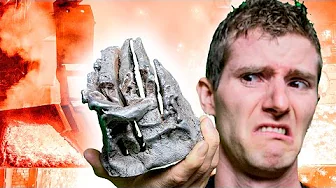
The WORST CPU Cooler EVER – Sketchy Heatsinks Ep2
0 up · 0 down · 0 ratings
Promos
We set out to build the world's WORST CPU cooler... and boy, we certainly did succeed... Freshbooks sponsor link: For your unrestricted 30 days free trial, go to freshbooks.com and enter in “Linus Tech Tips” in the how you heard about us section. Tunnelbear sponsor link: Try Tunnelbear for free at tunnelbear.com and save 10% Buy CPU heatsink on Amazon: geni.us Discuss on the forum: linustechtips.com Our Affiliates, Referral Programs, and Sponsors: linustechtips.com Linus Tech Tips merchandise at designbyhumans.com Linus Tech Tips posters at crowdmade.com Our camera setup: geni.us twitter.com @LinusTech Intro Screen Music Credit: Title: Laszlo - Supernova Video Link: youtube.com iTunes Download Link: itunes.apple.com Artist Link: soundcloud.com Outro Screen Music Credit: Approaching Nirvana - Sugar High youtube.com Sound effects provided by freesfx.co.uk
The video documents the second episode of Sketchy Heatsinks, where the team from Linus Tech Tips attempts to cast and assemble a so called worst CPU cooler using scrap aluminum and improvised casting methods. They begin by recounting suggestions from viewers to cast their own heatsink and describe the plan to cast with molten aluminum in a home workshop. The team explains the theory behind casting, including the need for a mold, venting, and how to account for aluminum’s oxide layer and shrinkage. They print an initial PLA prototype to size the mold, then proceed to create a green sand mold and a graphite crucible furnace, step by step detailing the process and the challenges around achieving a solid pour. The project progresses through several iterations, including lost PLA casting and later a foam lost foam approach, each time testing how well the molten aluminum fills the mold and how the final shape performs as a heatsink. The culmination sees mounting the final attempt on a motherboard with an Intel Q6600, adding thermal paste and securing the setup with zip ties, while the team reflects on the outcome, acknowledging that the result is far from ideal but informative for future iterations. They close by analyzing the testing results, humorously rating the effort and outlining lessons learned, before promoting related software sponsors and inviting viewers to follow along for the next installment. The narrative blends hands-on tinkering with practical engineering constraints, emphasizing learning through trial and error. Concrete details include a clay and sand green sand mixture used for the initial mold, a graphite crucible for melting aluminum, and the transition from lost PLA casting to lost foam casting to simplify the mold process. The creators discuss heat transfer concepts like surface area, static pressure, and the mass of the heatsink, and they explicitly note the limitations of their techniques, such as porosity and incomplete filling of fin structures. Throughout, the video interleaves technical explanation with lighthearted commentary and friendly banter, maintaining an approachable tone despite the technical complexity. The ending frames the episode as a learning experience, acknowledging the project did not meet lofty goals but provided valuable debugging experience and a teaser for future refinements in Sketchy Heatsinks.
Topics · hardware · technology · engineering · diy
Questions answered
- What is the main objective of Sketchy Heatsinks Ep2?
- To attempt casting a functional but deliberately poor CPU cooler from aluminum scrap and document the process and results.
- Which casting methods are explored in the video?
- Lost PLA casting and later lost foam casting are explored as methods to create the heatsink mold.
- What CPU is used for testing the final build?
- An Intel Q6600 is used to mount and test the final heatsink prototype.