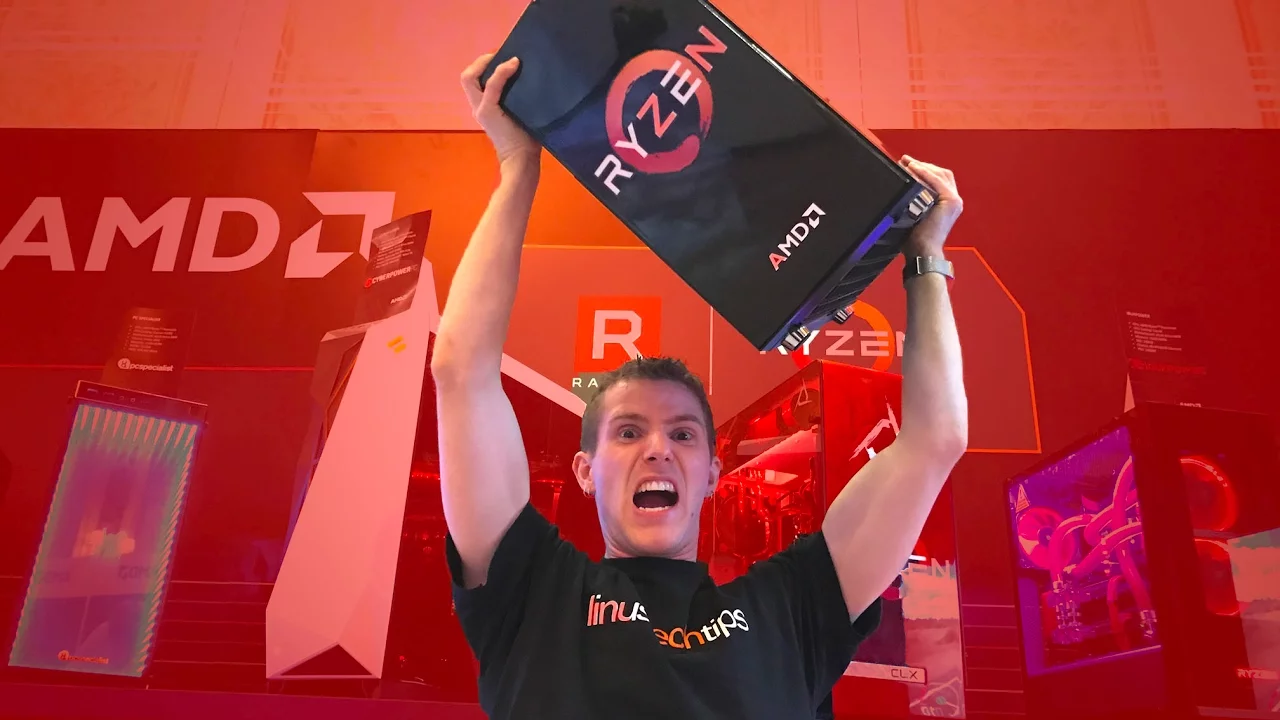
AMD Has Ryzen!
0 up · 0 down · 0 ratings
Channels and socials
Thanks to AMD for sponsoring this video from CES 2017! Learn more about Ryzen at amd.com Holy actual crap. Ryzen is in the suite, and it looks awesome!! Follow: twitter.com @linustech Join the community: linustechtips.com
AMD Has Ryzen! covers AMD's CES 2017 demonstrations of the Ryzen platform, focusing on real hardware samples rather than later-produced chatter. The video begins with a setup of Ryzen systems on display, including a water-cooled unit with a striking red build and a logo in Chinese, which emphasizes the scale and visual appeal of the Ryzen ecosystem. The presenter walks through a reference design motherboard with an 8-core, 16-thread Ryzen CPU, dual-channel DDR4, and a Titan XP GPU to showcase performance headroom, noting that RX 480 is not the limiting factor for CPU performance in these demos. A key point is the commentary on why CPU-based encoding was used for streaming rather than Quick Sync, explaining limitations on certain Intel generations and the potential image quality benefits of CPU encoding. The discussion shifts to how Ryzen compares to Intel's Skylake and Broadwell architectures, highlighting the concept of Infinity Fabric for core-to-core communication and the implications for gaming and streaming workloads. The presenter concludes with expectations for early 2017 retail chips and boards, signaling excitement for hands-on testing and broader Ryzen availability, while thanking AMD for CES coverage and inviting viewers to subscribe for more updates. Overall, the video frames Ryzen as a serious competitor with real performance potential, while acknowledging that final retail results will depend on production chips and driver optimization.
Topics · technology · computers · gaming · consumer electronics
Questions answered
- What clock speeds were Ryzen CPUs running at in the demos, and how did that relate to precision boost timing?
- The Ryzen chip shown in the reference design was running at about 3.4 GHz without the precision boost, with clock speeds potentially increasing under dynamic boost conditions once enabled.
- Why did AMD use CPU-based encoding for streaming in the demos instead of Quick Sync?
- Because Quick Sync does not exist on some high-end Intel generations used for comparison, and CPU encoding with proper settings can deliver high image quality for streaming, showing a potential advantage of Ryzen for broadcast workloads.