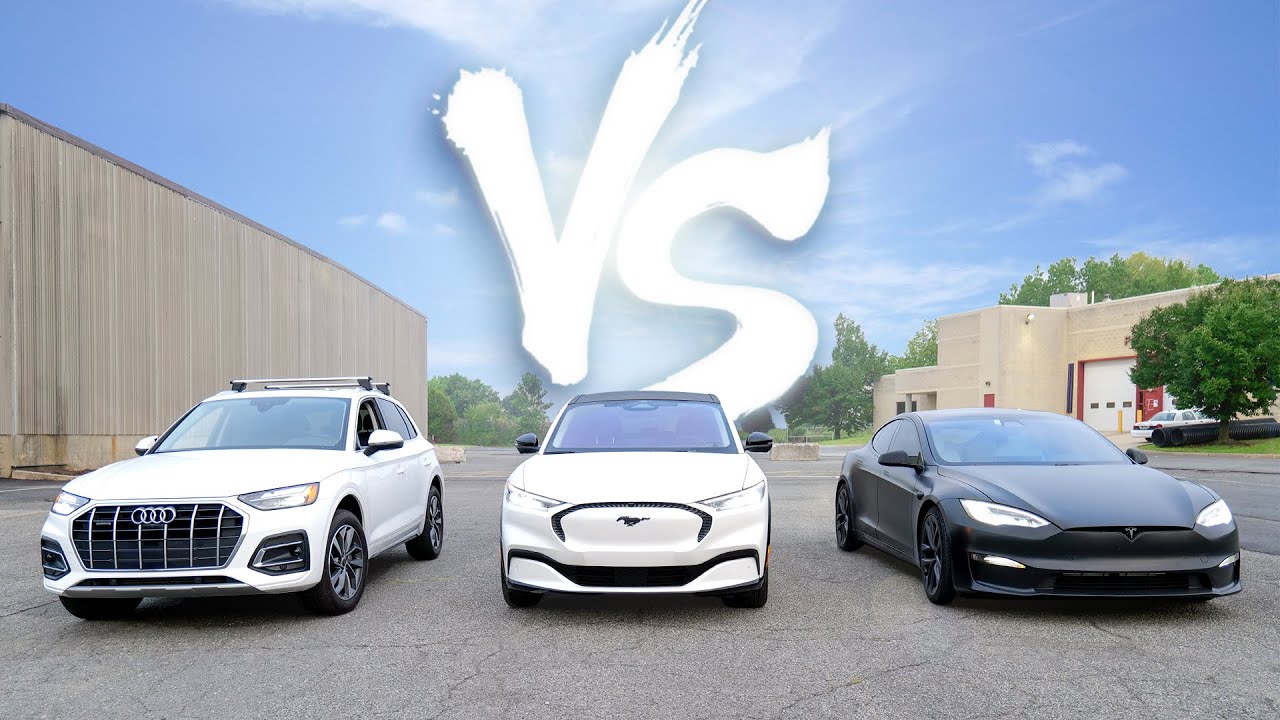
Driving 1000 Miles in 3 Cars: Gas vs Electric!
0 up · 0 down · 0 ratings
Promos
We drove a Tesla, a Mustang Mach-E and a gas car 1000 miles in a loop to see which was fastest. This was our road trip results! Studio channel: youtube.com MKBHD Merch: shop.mkbhd.com Tech I'm using right now: amazon.com Intro Track: youtube.com Playlist of MKBHD Intro music: goo.gl Mach-E provided by Ford for the video. ~ twitter.com @MKBHD @MKBHD
MKBHD conducts a real world comparison road trip to answer whether driving 1000 miles in electric cars is significantly slower than in a gas car, and whether it matters which electric car you choose. The video frames the experiment as a loose but structured test with three vehicles: a Tesla Model S Plaid, a Ford Mustang Mach-E California Route 1 edition, and an Audi Q5 gas car serving as the control. The route starts at the same origin and includes key waypoints like Ithaca, Lake Placid, Niagara Falls, Scranton, and ends back at the studio, with two days of travel and an overnight hotel stop to separate legs. Early on, the host emphasizes two rules: no speeding and visiting all waypoints to collect data and photos, while also tracking charging and fueling times to gauge total trip duration. The first leg reveals that the gas car leads in total time, the Tesla trails by about half an hour, and the Mach-E lags further behind due to charging bottlenecks. The analysis then shifts to day two where the Mach-E adopts a strategy of using only Electrify America chargers and relying on independent navigation for charging, which improves its performance but still trails the Tesla and gas car, highlighting the critical role of charging infrastructure reliability and navigation accuracy. The video closes with a data-driven verdict: the Tesla adds roughly 1 hour 32 minutes per 1000 miles, the Mach-E adds about 7 hours 32 minutes (much of that on day one), and the gas car remains most time-efficient in this specific setup. The comparison also weighs factors beyond raw time, including range display accuracy, charger availability, and network design, noting that Tesla’s integrated ecosystem and precise route planning contribute significantly to its advantage for long road trips. Finally, the host reflects on costs, emphasizing energy per kilowatt-hour and noting that while electricity is cheaper per mile than gas, real world charging costs vary by network, location, and whether credits or subsidies apply. The video invites viewers to consider future updates as charger networks expand and EV ranges grow, and to share what their next car purchase will be, gas or electric.
Topics · automotive · electric-vehicles · road-trip · technology · science
Questions answered
- What was the purpose of the road trip experiment in the video?
- To compare how long it takes to travel 1000 miles in a gas car versus two electric cars and to analyze the impact of charging infrastructure and range on trip duration.
- Which car finished first in the 1000 mile test?
- The gas Audi Q5 finished first on the initial leg, with the Tesla Model S Plaid and the Mustang Mach-E following, and day-two results kept the gas car in front until the end of the comparison.
- What factor helped the Mustang Mach-E improve on day two?
- Using independent navigation and exclusively targeting Electrify America chargers helped reduce delays from broken or misreported charging stops.
- Did charging costs favor electric vehicles in the test?
- Yes, electricity per kilowatt-hour was cheaper than gasoline, but total costs depended on charging credits and network pricing, resulting in different overall costs for each car.