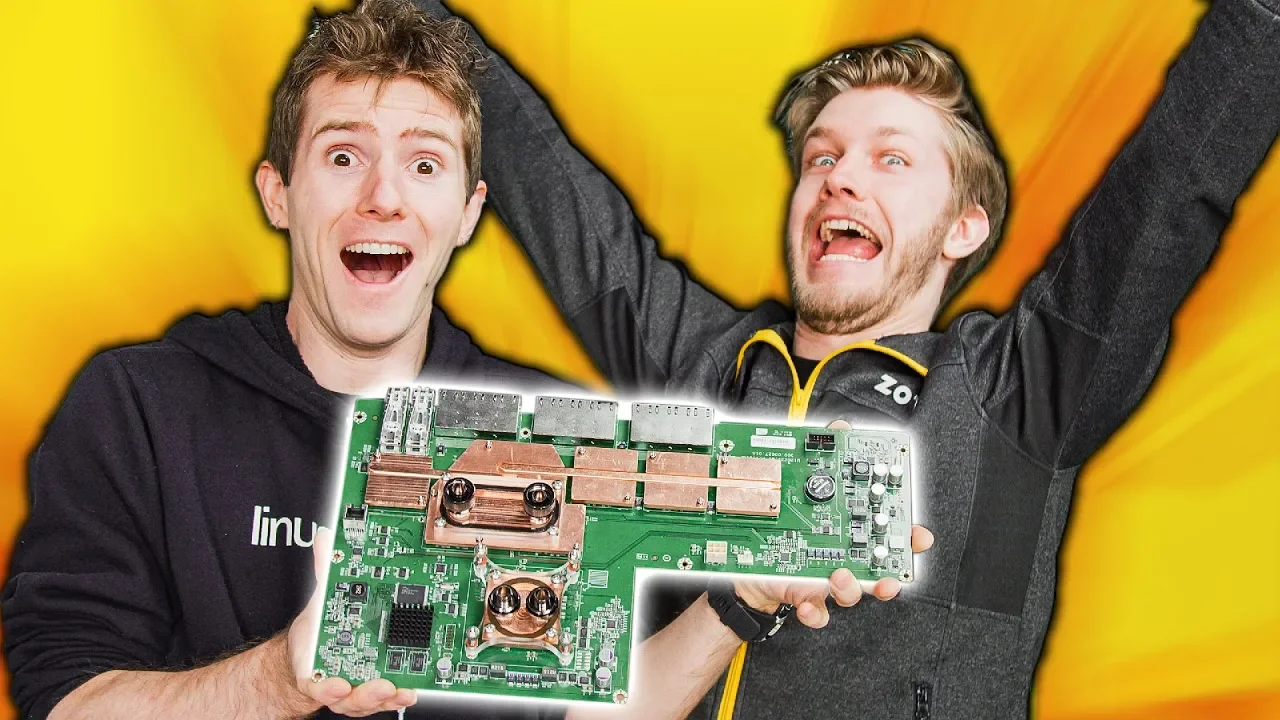
Water Cooling a Network Switch!
0 up · 0 down · 0 ratings
Description
Get a 15-day free trial for unlimited backup at backblaze.com
Promos
Check out the Hot Dox Keyboard at hotdox.live One of our 10 gig network switches is kinda loud, so the obvious solution is to water cool it. The CAD: grabcad.com Buy Digital Calipers On Amazon: geni.us On Newegg: geni.us Buy a 10 gig switch On Amazon: geni.us On Newegg: geni.us Discuss on the forum: linustechtips.com Our Affiliates, Referral Programs, and Sponsors: linustechtips.com Get Private Internet Access today at geni.us Linus Tech Tips merchandise at lttstore.com Linus Tech Tips posters at crowdmade.com Our Test Benches on Amazon: amazon.com Our production gear: geni.us Twitter - twitter.com Facebook - @LinusTech Instagram - @linustech Twitch - twitch.tv Intro Screen Music Credit: Title: Laszlo - Supernova Video Link: youtube.com iTunes Download Link: itunes.apple.com Artist Link: soundcloud.com Outro Screen Music Credit: Approaching Nirvana - Sugar High youtube.com
Water cooling a network switch is pitched as a playful, experimental project that pushes a consumer 10 gigabit network switch into a much quieter, cooler operation. The creators begin by acknowledging the obvious route would be to have a specialized cooling partner, but decide to pursue a do-it-yourself water cooling approach to demonstrate what is possible with a mid-range switch. They discuss the constraints of 1U form factors, limited ventilation, and the challenge of moving heat away from dense network hardware. Early on they inspect the switch, plan a copper heat spreader, and sketch ideas for tubing, heat pipes, and a compact radiator arrangement. The video blends hands-on machining, improvisation, and quick problem solving as components are cut, drilled, and tested, sometimes with humorous missteps that keep the tone light. By iterating on a copper plate, heat pipe layout, and a custom reservoir, they demonstrate an aggressive approach to thermal management, including epoxy sealing, o-ring considerations, and the integration of a water loop with a 12-volt pump. Finally, after a lengthy assembly and safety checks, they power the pump and witness a dramatic drop in temperatures, confirming that the cooling strategy is functional and significantly quieter, albeit with a wrench heavy, jury-rigged aesthetic. The closing portion emphasizes the practical outcome: lower operating temperatures, quieter operation, and a successful test transfer, while acknowledging ongoing refinements and potential future versions with improved heatsinks. The segment ends with reflections on the process, the value of experimentation in hardware projects, and a call to viewers to share their own cooling ideas and experiences within the community. Overall, the video communicates a hands-on, trial-and-error spirit and invites the audience to appreciate the balance between clever hacks and practical engineering in a maker environment.
Topics · technology · diy · hardware_hacking · networking · cooling · maker_space
Questions answered
- What cooling method is used for the network switch in this video?
- A water cooling loop is built around a copper heat spreader and heat pipes connected to a radiator and pump.
- Why do the creators choose to water cool a consumer network switch?
- Because the switch is loud and hot, and cooling it more effectively reduces noise and temperature, showcasing a maker-style solution.
- What challenges do they encounter during fabrication?
- They face machining difficulties with grooves, limited tooling, leaks, alignment issues, and the need for careful assembly of heat sources near the condenser.
- Did the cooling system prove effective in testing?
- Yes, the temperatures dropped significantly and the system ran quieter after the radiator and pump were installed.
- What future improvements are hinted at?
- Plans include a version two with server-sized heatsinks and refined mounting to improve aesthetics and cooling performance.