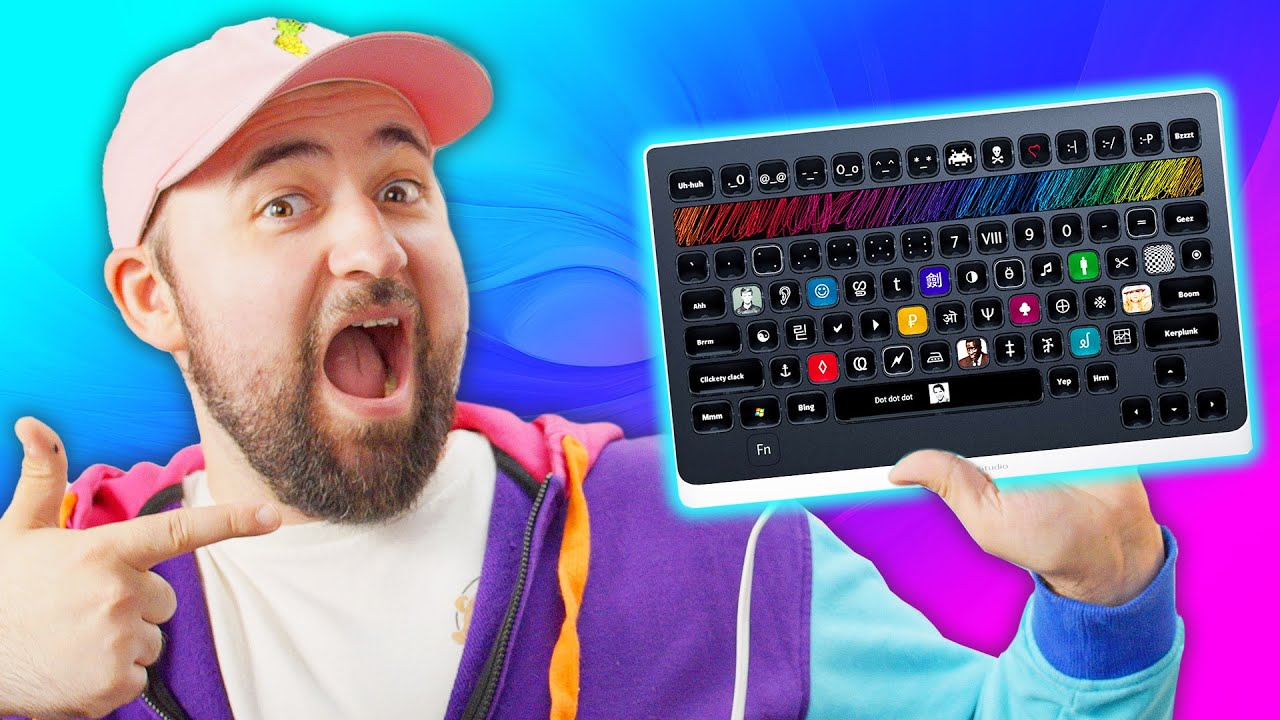
This keyboard plugs into the wall! - Optimus Popularis
0 up · 0 down · 0 ratings
Description
Switch your USB devices between two systems with ease!
Promos
Check out the UGREEN USB 3.0 Switch Selector at lmg.gg Plouffe has seen a LOT of keyboards, but he's never used one that plugs into the wall for extra power... The Optimus Popularis has an interesting name and an interesting gimmick -- the keys are made of screens! Does this feature make for the ultimate custom keyboard, or does its high price and confusing software make this a relic of the past? Want us to unbox something? Make a suggestion at lmg.gg ► GET MERCH: lttstore.com ► LTX 2023 TICKETS AVAILABLE NOW: lmg.gg ► GET EXCLUSIVE CONTENT ON FLOATPLANE: lmg.gg ► SPONSORS, AFFILIATES, AND PARTNERS: lmg.gg ► PRODUCTS WE USE ON THE SHORTCIRCUIT SET: lmg.gg FOLLOW US ELSEWHERE --------------------------------------------------- Twitter: twitter.com Instagram: @shortcircuityt TikTok: @linustech Facebook: @ShortCircuitYT CHAPTERS --------------------------------------------------- 0:00 This thing is pretty rare... 0:56 Unboxing 2:02 Design and initial feel impressions 3:43 Sponsor - UGREEN 4:15 Powering it up 4:55 Typing test(s) 6:48 Pricing and software features 9:06 Overall thoughts 11:27 Outro
This video dives into the Optimus Popularis keyboard, a highly unusual 2012-era device that plugs directly into the wall and features LCD screens on its keys. The host begins by noting its rarity and high original price, explaining that the predecessor, the Optimus Maximus, carried similar ambitions with OLEDs and an even steeper cost. The unboxing reveals a gear that feels dated but undeniably unique, with the emphasis on its ability to display different characters and languages without swapping keycaps. The host highlights the power brick and country adapters, stressing that the product is now out of production and hard to find, which adds to its cult appeal. The design is described as wired, relatively light for its time, and visually striking, even as some components and switches feel quirky or finicky. Overall, the video frames the device as a bold, historically significant experiment in keyboard customization, balanced against practical drawbacks and a steep price tag. In the middle portion, the host powers up the keyboard to showcase the illuminated screens and discusses the software, which resembles an Apple-esque interface but is reportedly difficult to use due to its age and ambiguity. A practical test is performed by connecting USB devices and attempting typing tests, revealing that many switches are inconsistent, some keys require multiple presses, and the spacebar is notably problematic. The reviewer compares the gadget to a stream deck in concept, noting that while you can script macros and display information on each screen, the hardware is not designed for typical typing comfort. The text also delves into hardware constraints of a 10-plus-year-old product, including potential NKRO concerns and the necessity of keeping the device plugged into a power source for reliable operation. The overall sentiment is mixed: the keyboard is visually and historically fascinating, but the typing experience and software experience feel archaic and impractical by modern standards. The closing segment weighs cost, feasibility, and what the Optimus Popularis represents in the evolution of customizable keyboards. The host notes that, despite the price and power requirements, this keyboard foreshadows contemporary macro and programmable panels, while acknowledging that newer devices like the Flux and Stream Deck offer more accessible approaches to similar ideas. The video emphasizes the plug-in-wall power design as a defining trait, discusses the possibility of powering via USB-C, and compares the device to its OLED successor, the Optimus Maximus. In summary, the reviewer treats the Popularis as a historical marvel that pushed the boundaries of keyboard customization, while clearly questioning its practicality and value for today’s users. The piece ends with appreciation for the engineering feat and a nod to the device’s place in tech gadget history, inviting viewers to consider whether such oddities belong in a collection or as a functional daily driver.
Topics · technology · electronics · gadgets · product_reviews · history_of_tech · hardware · customization
Questions answered
- What makes the Optimus Popularis unique compared to typical keyboards?
- It uses LCD screens on the keys and requires a power connection from the wall, offering language flexibility and custom layouts without changing keycaps.
- Is the software usable for configuring the keyboard today?
- According to the video, the software is functional but not intuitive, with a dated interface that can be difficult to navigate.