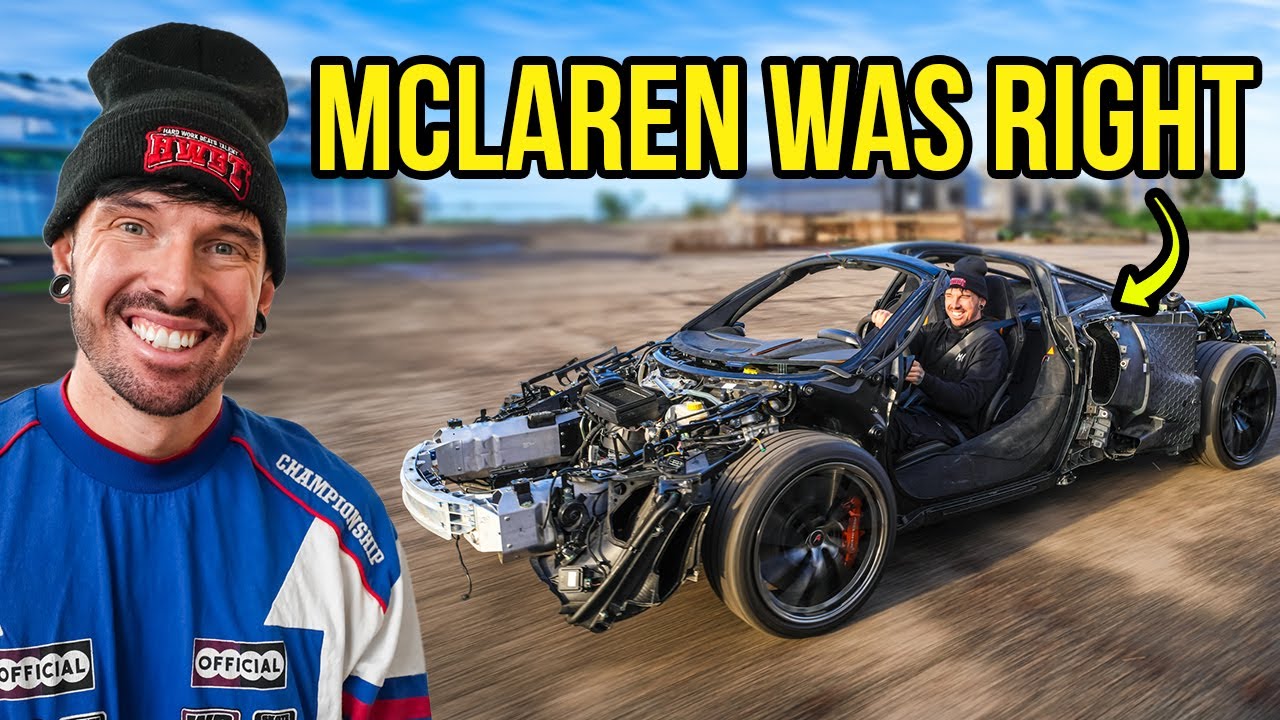
DRIVING MY WRECKED MCLAREN 720s I JUST REBUILT
0 up · 0 down · 0 ratings
Promos
Check if your car was damaged with Car Vertical - 10% off here carvertical.com Finally the Mclaren 720's is on the road, thanks to a little trick from Mclaren! It wasnt easy though from buying it crash damaged in Amsterdam to having to swap the whole tub and rebuild the 720s from scratch. Now ive got to finish it....
ALL MA MERCHANDISE
Channels and socials
FOR MORE CONTENT
CHECK OUT MY SECOND CHANNEL
Follow Me Here Aswell
Notes
DRIVING MY WRECKED MCLAREN 720S I JUST REBUILT follows Matt Armstrong as he continues the massive rebuild of a crashed McLaren 720S, bought in Amsterdam and reassembled from a damaged carbon tub. The video opens with Matt at McLaren to source missing parts that were hard to find, explaining the high stakes of rebuilding a tub from scratch the way the factory does. He recounts the early risk of buying a damaged car and the challenge of restoring not just the shell but the entire mechanical and electronic architecture. We see a tense moment when the car starts to smoke after initial testing, which sets up the main obstacle of diagnosing and resolving potential oil overfill and engine health before moving forward. The narration emphasizes the involvement of McLaren technicians and the plan to swap the suspension with brand-new parts, while also addressing the broader strategy of test runs to verify oil temperature and level due to the absence of a traditional dipstick. The narrative underscores the willingness to spend on necessary components, including nearly £3,000 for new suspension, to ensure the car can be driven safely. The episode then pivots to troubleshooting oil overfill symptoms, with the team learning that overfilling can push oil into the Breather System and cause smoke, and the crew tests the system by warming the car to temperature and monitoring the oil readout on the screen. A critical step is installing new suspension and handbrake components, followed by a deep dive into compatibility issues with drop links and link lengths, which reveals an unexpected variance between left and right side components. The crew uses a diagnostic tool to scan for fault codes, discovering that McLaren requires a specialized diagnostic device to access certain modules, including airbags and belt systems, which affects the interior reassembly and airbag status. As the interior goes back together, Matt stresses the importance of seat belt integrity and the challenges of clearing codes without full McLaren proprietary tools, while also reassembling the interior trim and re-homing the engine cover. The video culminates in a dramatic moment where the car finally moves under its own power, signaling a major milestone in the rebuild, with Matt reflecting on how far the project has come from a bare shell to a running car. He hints at future steps, including finishing the body panels and paint, and teases the next video where more cosmetic and performance refinements will be completed. Overall, the episode balances technical detail with a personal triumph narrative, delivering a practical look at high-end rebuilds alongside the emotional reward of seeing a project come to life. The closing messages invite viewers to subscribe for more updates and to follow along on the journey toward a completed, roadworthy McLaren 720S, while teasing content on the second channel and product merch.
Topics · automotive restoration · car rebuild · supercar · DIY car repair · motorsport culture · consumer automotive technology
Questions answered
- What caused the initial smoke in the engine after the rebuild?
- The smoke was initially thought to come from oil burning, which can happen if the engine is overfilled with oil. Overfilling can push oil into the Breather System and exhaust, causing visible smoke until the excess oil is burned off.
- Why did the team replace the suspension, and what was learned about the new parts?
- The original suspension was bent and leaking, so new suspension components were installed. A critical finding was that some parts, like drop links, did not match perfectly by side or model, requiring substitutions and careful verification with McLaren parts to ensure correct fit and function.
- What diagnostic challenge did the crew face after reassembly?
- The car uses McLaren-specific modules and airbags that require a dedicated McLaren diagnostic tool to read and clear codes. Without the tool, the team had to approximate fault clearing, relying on basic OBD-like readings and manual checks for things like seat belts and airbags.
- What is the next planned step after the car runs again?
- The next steps involve bolting on all body panels once they are painted, further refining the setup, and continuing to document the progress toward a fully road-ready McLaren 720S in subsequent videos.