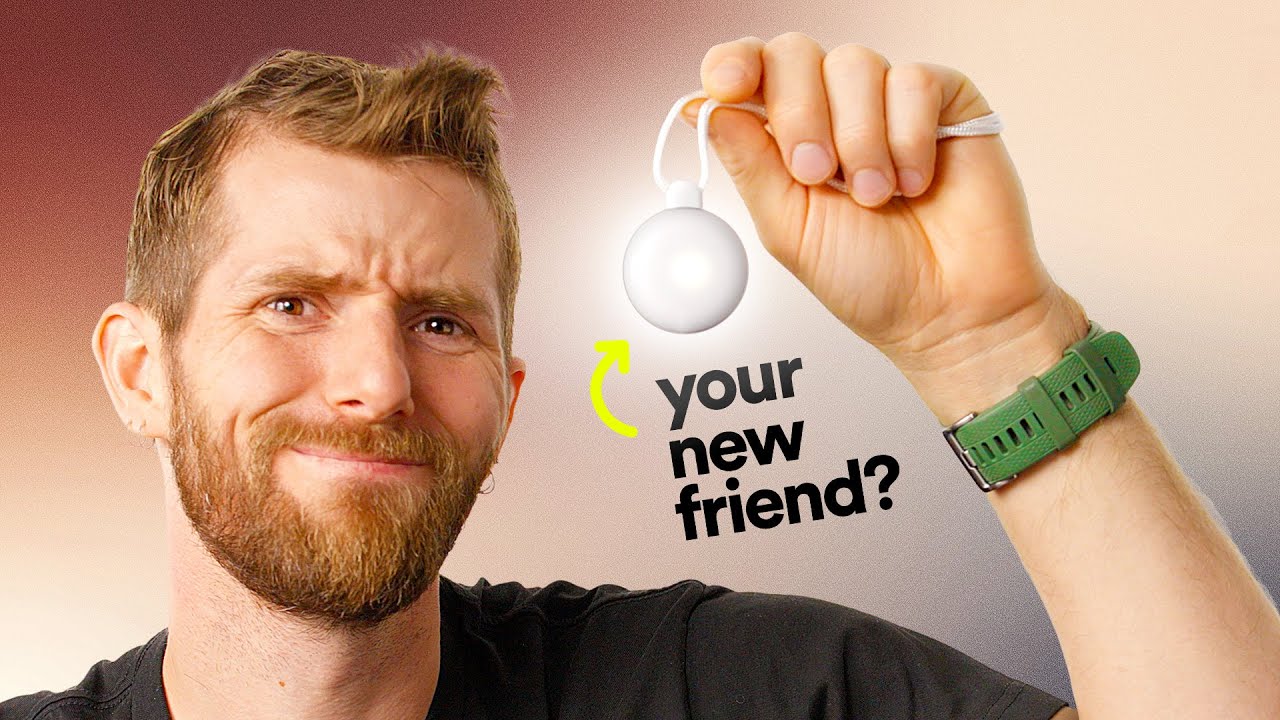
I bought a friend - Friend AI Pin
0 up · 0 down · 0 ratings
Description
Check out the Secretlab Titan Evo ergonomic gaming chair at lmg.gg and give your back the support it deserves! For $130, you can wear an AI “friend” around your neck. Linus tests its quirks, questions its privacy tradeoffs, and finds out if anyone would actually want one. The reactions in public say a lot about who this device is really for...
Promos
Check out Friend: lmg.gg Want us to unbox something? Make a suggestion at lmg.gg ► GET MERCH: lttstore.com ► GET A VPN: piavpn.com ► GET EXCLUSIVE CONTENT ON FLOATPLANE: lmg.gg ► SPONSORS, AFFILIATES, AND PARTNERS: lmg.gg Purchases made through some store links may provide some compensation to Linus Media Group. Affiliate links powered in part by affilimate.com Linus Sebastian is an investor in Framework Computer, Inc CHAPTERS --------------------------------------------------- 0:00 Intro 0:36 Unboxing the Friend necklace 1:19 First impressions and design quirks 2:57 Privacy policy and data collection concerns 4:00 Sponsor 4:42 Naming the AI and first setup 6:02 Testing responsiveness and limitations 7:12 Functionality without a camera 8:00 Trying real-world conversations 9:54 Field test outdoors 11:41 Public reaction test 13:04 Price and final thoughts 14:13 Credits
I opened the video by revealing the actual unboxing of the Friend AI Pin necklace, commenting on its design and how it sits around the neck. The host points out the packaging glow and the single microprocessor inside, noting that the device charges via USB-C and is designed to be worn daily, with a basic charging cable included. He walks through the initial setup, including naming the AI friend and the tension between wanting a companion and the anxiety of forming real-life relationships, all while highlighting the coin-operated nature of the marketing push. The middle portion dives into privacy and data collection concerns, with a focus on the device’s always-on microphone, passively recorded surroundings, and terms that users must agree to, which raise questions about consent and data handling. A sponsor break appears, followed by a hands-on exploration of how the app interacts with the device, including attempts to test the AI’s responsiveness in real-world conversations, and a field test outdoors that showcases the device’s limitations and its dependence on a phone for actual replies. The host then tests social reaction by approaching bystanders, capturing mixed responses from the public about the concept of wearable AI friendship and the device’s overall value. He weighs the price at $130 US and Canadian tax implications, contrasting the novelty value with practical utility, before concluding that while the necklace might not be for everyone, it could appeal to a niche audience seeking constant companionship. The video ends with broader reflections on loneliness, parasocial relationships, and whether such devices solve real social problems, ultimately leaving the door open for better iterations in the future.
Topics · technology · gadgets · wearables · ai · privacy
Questions answered
- What is the Friend AI Pin and what does it do besides being a wearable necklace?
- It is an AI-powered wearable that functions as a digital companion, responding to user prompts through a connected app, with memories stored on the device and interactions potentially triggered by a button press rather than always listening.
- Does the device have a camera, and what about privacy policies and data collection?
- The marketing claims no camera is included, but there is a microphone and terms indicate passive recording of surrounding audio and biometric data, with user consent required for data collection and storage.
- Is the AI more like a social helper or a real replacement for human interaction?
- The device is positioned as a companion tool to interact with, not a substitute for real relationships, and the reviewer questions its value for genuine connection, privacy, and long-term usefulness.