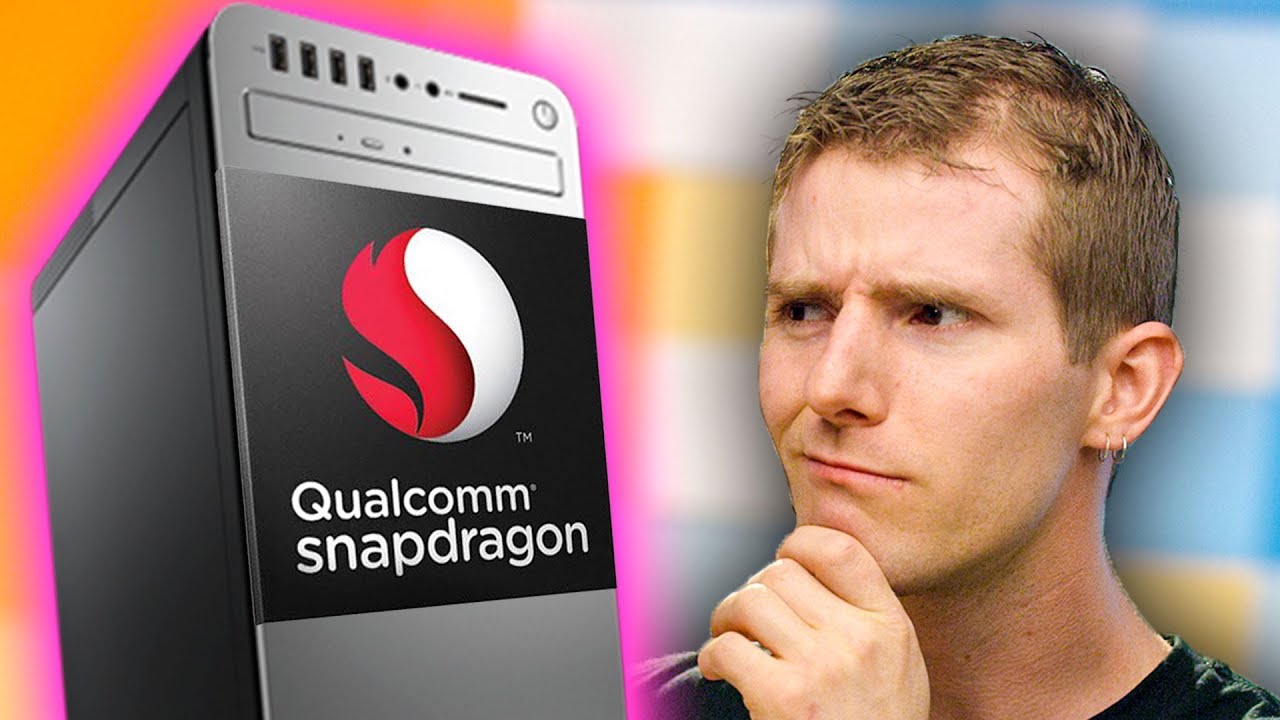
Phone Chips Powering Desktops?
0 up · 0 down · 0 ratings
Promos
Tell us what you want to see from Linus Media Group merch! goo.gl Twitter: twitter.com Instagram: @TechLinkedYT Facebook: @TechLinked NEWS SOURCES: OPTANE IS STILL KICKIN' youtube.com arstechnica.com newsroom.intel.com RYZEN UP, BACK ON THE STREET anandtech.com - Scroll down, get the spec list pcworld.com PHONES ARE LAPTOPS NOW OK GUYS Qualcomm-powered laptop coming from ASUS xda-developers.com And Cortex A76, reaching desktop-like power extremetech.com And native 64-bit ARM apps comin' up engadget.com QUICK BITS GEFORCE IN AUGUST kitguru.net A CLEAR COPY arstechnica.com theverge.com VISA: NOWHERE YOU WANT TO BE theguardian.com WHO NEEDS AI...JUST TEXT WALMART engadget.com ASSASSINATE SOME GREEKS twitter.com kotaku.com
The video discusses advances in memory and computing that blur the lines between RAM and storage, starting with Intel Optane DC Persistent Memory. The host explains that these DDR4 modules come in 128, 256, and 512 GB variants and, unlike traditional DRAM, are persistent, meaning data remains even when power is lost. Intel claims these modules could eliminate the need to shuttle data between memory and storage, potentially increasing the amount of memory available to processors and altering system architecture. The segment also notes that initially these modules will be available on Intel’s next-gen Xeon platform, with the possibility of broader mainstream adoption in the future, which could fundamentally change how PCs are designed to handle data. The discussion then shifts to other market movements, including new Ryzen processors and ASRock’s leak of 2nd-gen Ryzen names, hinting at 45W TDP options aimed at budget overclockers, with Computex anticipated as the venue for more details. In parallel, the video covers ARM on desktops, with Qualcomm-powered Windows 10 devices on the horizon, ASUS reportedly working on a Snapdragon 1000-based laptop, and the potential for native 64-bit ARM apps to run on Windows, such as a VLC ARM64 build, signaling a shift toward desktop-class performance on ARM devices. The hosts wrap with light humor about merch feedback, a tease of future gadget ideas, and a quick nod to Nvidia announcements, followed by a playful closing that invites viewers to subscribe and participate in the channel’s merch survey, while joking about the limits of merch ideas like flamethrowers and mustard. The overall takeaway is that the PC landscape is evolving with persistent memory, ARM-based desktop options, and new processor lineups that could redefine performance, storage, and power efficiency in future desktops and laptops, with Computex and major product reveals on the near horizon.
Topics · Computing · Hardware · Technology · Tech News
Questions answered
- What is Intel Optane DC Persistent Memory and how does it differ from standard RAM?
- Optane DC Persistent Memory is a non-volatile memory module that behaves like RAM but retains data when power is removed, potentially allowing memory and storage to be unified and increasing effective memory capacity.
- Why could ARM-based desktops with Qualcomm chips change the PC landscape?
- If Windows 10 runs on ARM-based systems with native 64-bit apps and desktop-class performance, it could enable more power-efficient laptops and desktops, expanding the range of devices and use cases for PCs.