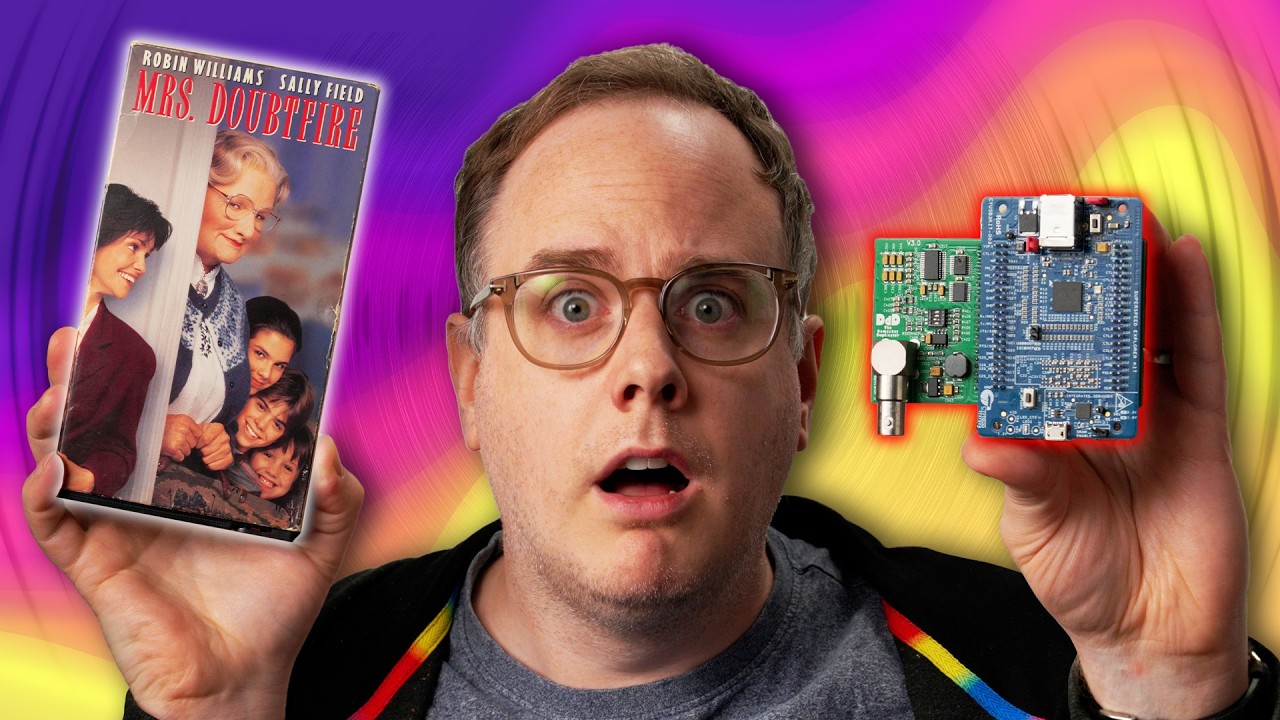
I've wasted THOUSANDS of dollars... - Domesday Duplicator
0 up · 0 down · 0 ratings
Promos
Check out the Sharge Disk Plus below: SHARGE Disk Plus official website link: bit.ly SHARGE Disk Plus Amazon link: amzn.to Mark is a VHS enthusiast, but what do you do when you want to archive your family history (or Mrs Doubtfire) in the high quality it was recorded in? Well, don't do what Mark did and buy a very expensive tape player and numerous recording doodads, and instead consider VHSdecode and the Domesday Duplicator.
Check out the Domesday Duplicator: lmg.gg Purchases made through some store links may provide some compensation to Linus Media Group. Want us to unbox something? Make a suggestion at lmg.gg ► GET MERCH: lttstore.com ► GET A VPN: piavpn.com ► GET EXCLUSIVE CONTENT ON FLOATPLANE: lmg.gg ► SPONSORS, AFFILIATES, AND PARTNERS: lmg.gg CHAPTERS --------------------------------------------------- 0:00 Digitizing made simple (and much cheaper) 2:36 Sponsor - Sharge 3:07 Finding the installation point 4:15 Capturing footage and decoding it 5:38 Captured footage comparison, pricing, and alternatives 6:47 Outro
The video opens with the creator reflecting on how spending thousands of dollars over the years on a high-end VHS capture setup ultimately fell short of expectations, prompting exploration of a different approach. The host introduces the Doomsday Duplicator as a historical solution that captures directly from RF signals, bypassing the limitations of traditional composite capture and the expensive gear that accompanied early digital conversion attempts. He explains that old VCRs and capture paths introduce processing artifacts and limitations, and that the Doomsday Duplicator can deliver a cleaner signal by decoding RF samples into digital video. The discussion emphasizes the trade-offs, noting that the device can be paired with affordable VCRs but may require careful soldering or alternative connection methods for optimum results. Throughout, the presenter frames VHS decode as a practical way to preserve family memories and other archival footage with greater clarity, precision, and color information than the older digitization pipelines allowed. The narrative then pivots to a practical demonstration, describing the installation steps, test points, and basic workflow required to capture from a tape, followed by a contrastive look at how this method stacks up against more conventional setups. Finally, the host highlights the broader ecosystem around VHS decoding, including community resources like wikis, GitHub, and Discord, inviting viewers to participate and potentially experiment with newer boards and cards that expand capabilities while keeping costs in check.
Topics · technology · archival · electronics · retro-computing · video-archiving · diy · hardware-hacking
Questions answered
- What is the Doomsday Duplicator primarily used for in this video?
- It is presented as a device to capture and decode RF signals from VHS tapes to produce higher quality digital video for archival purposes.
- Why might someone choose the Doomsday Duplicator over traditional digitization methods?
- Because it bypasses some of the color and signal loss associated with composite capture, potentially offering sharper images and more color detail when paired with the right workflow.