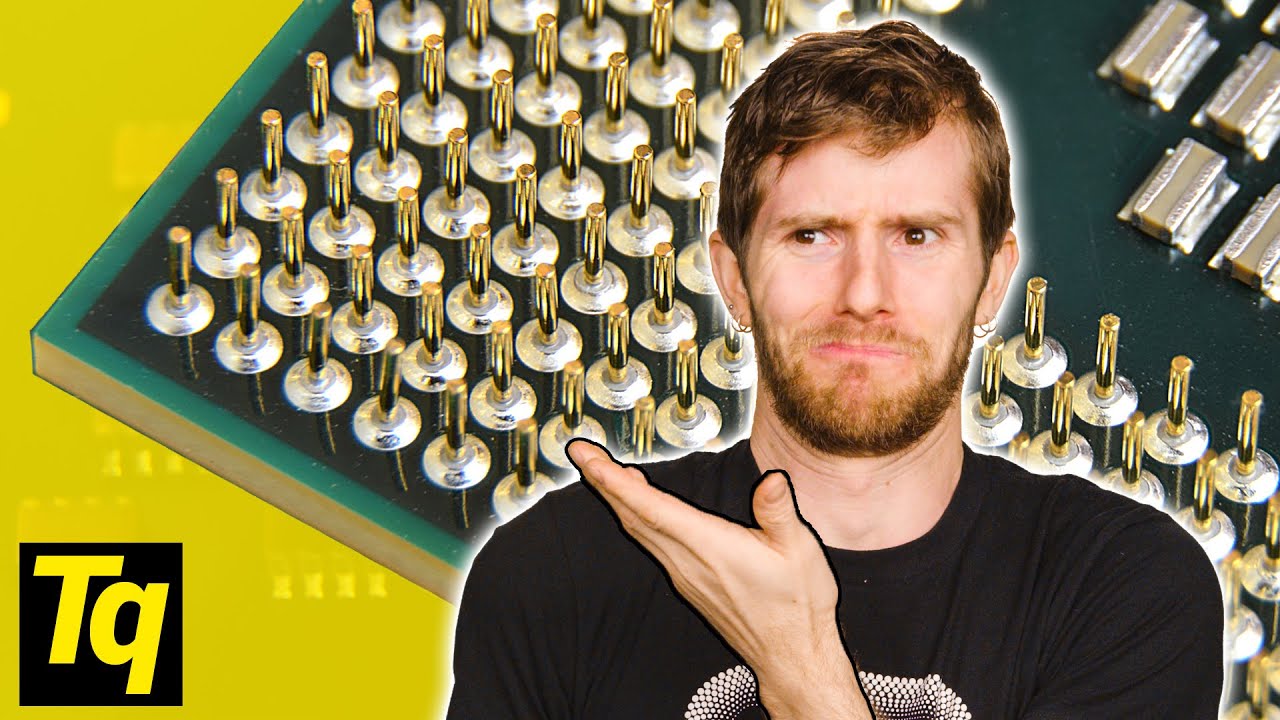
Is AMD Stuck In The PAST?
0 up · 0 down · 0 ratings
Promos
Sign up for Private Internet Access VPN at lmg.gg Why does AMD still use pins on their CPUs? Buy Intel i7 9700k CPU On Amazon (PAID LINK): geni.us On Newegg (PAID LINK): geni.us Buy MSI MPG Z390 On Amazon (PAID LINK): geni.us Leave a reply with your requests for future episodes, or tweet them here: twitter.com GET MERCH: lttstore.com SUPPORT US ON FLOATPLANE: floatplane.com LTX EXPO: ltxexpo.com Buy Intel CPUs On Amazon (PAID LINK): geni.us On Newegg (PAID LINK): geni.us Buy AMD CPUs On Amazon (PAID LINK): geni.us On Newegg (PAID LINK): geni.us AFFILIATES & REFERRALS --------------------------------------------------- Affiliates, Sponsors & Referrals: lmg.gg Get Private Internet Access VPN at lmg.gg Get a Displate Metal Print at lmg.gg Support a Creator code LINUSMEDIAGROUP on Epic Games Store: lmg.gg Get a 30-day free trial of Amazon Prime at lmg.gg Our Test Benches on Amazon: lmg.gg Our Production Gear: lmg.gg FOLLOW US ELSEWHERE --------------------------------------------------- Twitter: twitter.com Facebook: @LinusTech Instagram: @linustech Twitch: twitch.tv FOLLOW OUR OTHER CHANNELS --------------------------------------------------- Linus Tech Tips: lmg.gg TechLinked: lmg.gg ShortCircuit: lmg.gg LMG Clips: lmg.gg Channel Super Fun: lmg.gg Carpool Critics: lmg.gg
The video explains a long standing hardware design choice: why AMD and Intel use different contact methods on their CPUs, pins on the CPU (PGA) versus pins on the socket (LGA). It walks through the tradeoffs between each approach, noting that LGA allows more contacts in a smaller area, which helps with high speed features and stable power delivery, while PGA can be more durable and easier to install in some scenarios. The host emphasizes that pins are fragile, so moving pins to the motherboard can reduce repair costs when a CPU is misaligned or damaged on a pricey motherboard, and that PGA chips tend to be more forgiving during installation. The discussion also points out that AMD has persisted with PGA for consumer CPUs for years, even as Intel moved to LGA, and mentions exceptions like Threadripper and server lines that use land grid arrays with thousands of pins. The segment covers practical guidance for builders, such as careful alignment of pins or holes during installation and avoiding damage to delicate contacts. Finally, the video briefly plugs a VPN sponsor and invites viewer ideas for future episodes, highlighting the collaborative producer-audience relationship that underpins the channel. Overall, the episode blends a historical perspective with practical, hands-on considerations for PC builders. It clarifies that performance is not driven by PGA versus LGA alone, but by architectural decisions, clock speeds, and core counts. By comparing durability, repairability, and installation ease, the host helps viewers understand why AMD stuck with PGA while Intel leaned into LGA, and why the choice still matters to enthusiasts when upgrading or building new systems. The closing notes remind viewers to handle CPU pins with care and announce sponsor messages, reinforcing the show’s characteristic mix of education and light humor. The takeaway is that pin design influences maintenance and compatibility more than raw performance, and informed builders can choose platforms with confidence based on their priorities.
Topics · technology · computers · cpu_architecture · hardware_design · manufacturing · electronics · science_and_tech
Questions answered
- Why did AMD keep using PGA pins for consumer CPUs while Intel moved to LGA?
- AMD continued PGA for consumer CPUs to emphasize durability and easier initial installation, while Intel adopted LGA to cram more contacts into a smaller area for higher performance and power delivery.
- Do PGA or LGA designs affect CPU performance?
- No, performance is mostly determined by architectural design, clock speeds, and core counts, not by whether the CPU uses PGA or LGA.