Next Gen Display Experiences!
0 up · 0 down · 0 ratings
Description
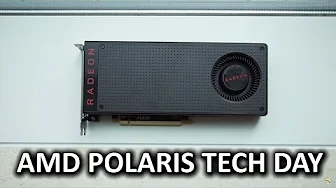
This video was sponsored by AMD. Learn more about their new Polaris graphics architecture at bit.ly Enter the giveaway at linustechtips.com AMD has done a LOT with Polaris' to make display tech even better. Let's
Channels and socials
check out a few of their new features! Buy AMD RX 480 on Amazon: geni.us Discuss on the forum: linustechtips.com Affiliates, referral programs, & sponsors: linustechtips.com Join our community forum: bit.ly twitter.com @LinusTech Intro Screen Music Credit: Title: Laszlo - Supernova Video Link: youtube.com iTunes Download Link: itunes.apple.com Artist Link: soundcloud.com Outro Screen Music Credit: Approaching Nirvana - Sugar High youtube.com Sound effects provided by freesfx.co.uk
The video dives into what AMD’s Polaris based graphics cards will enable beyond core GPU performance, focusing on next generation display experiences. Early on, the presenter outlines that the real emphasis is on display tech like 5K single-cable setups, FreeSync improvements over HDMI, and HDR improvements, rather than just the graphics cards themselves. He explains how DisplayPort 1.3 bandwidth enables a single cable to deliver 5K at 60 Hz by multiplexing into two DisplayPort 1.2 channels, a clever workaround since native 5K DP 1.3 monitors were not widely available at the time. The discussion expands to two 4K displays driven from one cable via MST, higher refresh rates such as 240 Hz at 1080p or 1440p SDR, and how these advancements broaden the practical window for adaptive refresh rate technology across resolutions. A notable portion covers FreeSync over HDMI, highlighting AMD's extension to HDMI 2.0 to support variable refresh rates, a capability not originally in HDMI specifications, and contrasts it with the existing G-Sync ecosystem. The presenter also explains HDR's broader ecosystem involving hardware on the GPU, display, and software mapping, arguing that HDR delivers more color and improved contrast without sacrificing detail in shadows. The segment closes with a hands-on look at the various demo setups, including an HDR-certified TV, an HDR-enabled monitor, and an SDR display using Reinhard tone mapping to present HDR content in SDR, emphasizing that the best experience depends on the combined hardware. Finally, AMD runs a giveaway and the host encourages viewers to participate through the description link, while wrapping with a light, audience-friendly sign-off and a plug for merchandise and community engagement. The overall takeaway is that Polaris aims to push display tech forward through higher bandwidth, flexible connections, and a richer HDR ecosystem, not just through higher frame rates alone.
Topics · technology · display technology · hardware · gaming
Questions answered
- What enables a 5K display to run on a single DisplayPort 1.3 cable in this presentation?
- DisplayPort 1.3 has about 87 percent more bandwidth than DP 1.2, allowing a single cable to carry multiple streams; the solution shown uses a cardboard adapter to split a DP 1.3 signal into two DP 1.2 channels for 5K at 60 Hz.
- How does AMD achieve FreeSync over HDMI, and how does it compare to HDMI 2.0 specifications?
- AMD extended HDMI 2.0 with a custom variable refresh rate implementation to support FreeSync over HDMI; this adds VRR outside the standard HDMI spec and is not limited to a particular monitor family, unlike older approaches.