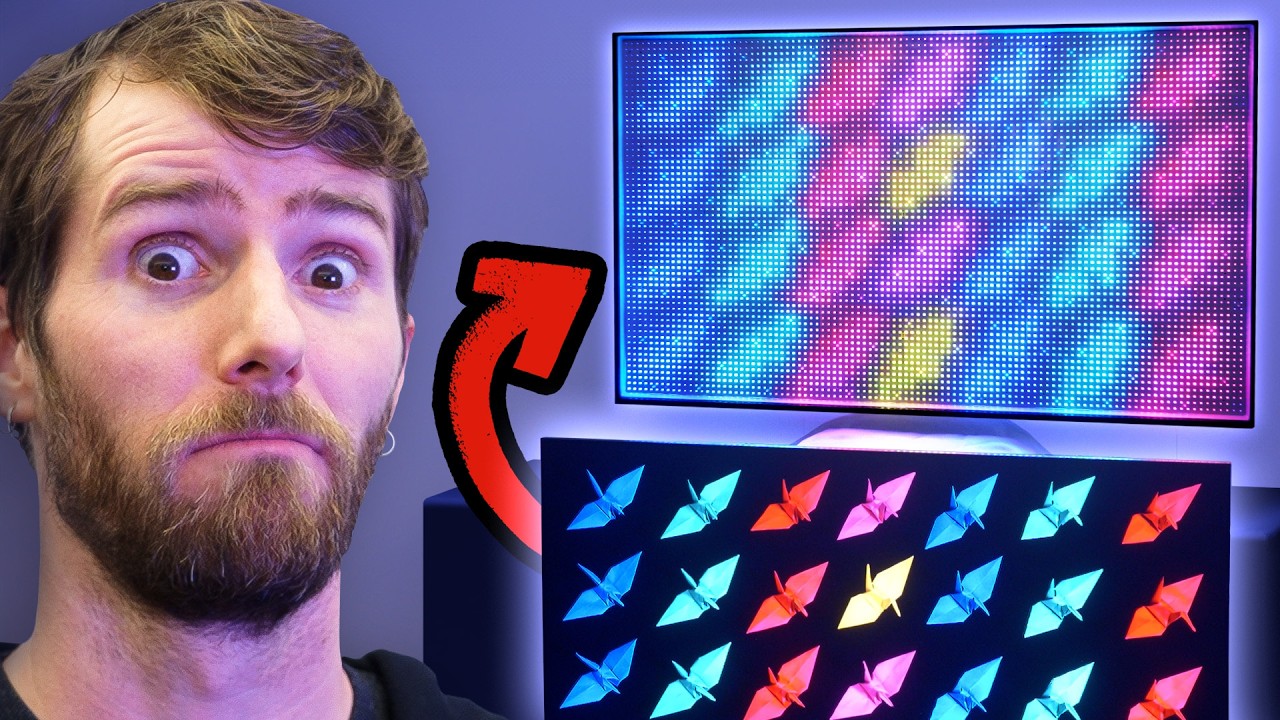
Sony Spent 20 Years Making This TV
0 up · 0 down · 0 ratings
Description
Thank you to Sony Electronics for sponsoring this video! We went all the way to Tokyo, Japan to
check out Sony’s True RGB TVs. They’re coming this spring on lmg.gg The last RGB LED TV we looked at had some flaws... But Sony says they've got the answer to beat the competition with their new True RGB technology. Linus flew all the way to Japan to check it out. Discuss on the forum: linustechtips.com
Channels and socials
Check out our Channel Partners: Secretlab - Grab a TITAN Evo ergonomic gaming chair: lmg.gg PIA - Get the VPN of our choice: piavpn.com dbrand - Buy a "Circuit" series skin for your device: dbrand.com ► SHOP LTT PRODUCTS: lttstore.com ► GET EXCLUSIVE CONTENT ON FLOATPLANE: lmg.gg ► DIVE DEEPER ON THE LTT LABS WEBSITE: lmg.gg ► SPONSORS, AFFILIATES, AND PARTNERS: lmg.gg Purchases made through some store links may provide some compensation to Linus Media Group. Affiliate links powered in part by affilimate.com Linus Sebastian is an investor in Framework Computer, Inc and HexOS by Eshtek. CHAPTERS --------------------------------------------------- 0:00 Intro 2:03 Quick Explanation of LCDs 3:24 What does Sony do different? 4:21 A neat demo from Sony 7:45 Outro
Sony spent nearly two decades refining a new backlight approach that aims to bridge consumer LCDs with reference-grade imaging. The video explains Sony’s True RGB LED technology, which uses three independent color diodes per backlight zone to deliver more precise color and brightness control than traditional white or blue backlights. A central claim is that Sony’s processing hardware dynamically tunes backlight color and intensity in real time to maintain accurate color, even under high peak brightness, while reducing color shift off-axis. The host compares the new LCDs to a $30,000 professional reference monitor, highlighting how the advanced processing and dense RGB zoning produce near reference image quality in a consumer product. The discussion covers the fundamentals of LCD limitations, why colored backlights can improve perceived color, and how Sony’s zone layout and 22-bit processing contribute to reduced halos and better skin tones in practice. Finally, the host notes Sony’s design approach, the transparency about their demos, and acknowledges that only time will tell how these sets compare when competing models mature in the market. The video also teases a future comparison to flagship OLEDs and emphasizes that Sony’s access to pro workflows and filmmakers informs the engineering direction. In short, Sony positions True RGB as a genuine leap for consumer displays, with real-world demos suggesting a compelling balance of color accuracy, brightness, and processing that could redefine high-end LCD performance. The review builds a narrative around three core elements: the RGB backlight architecture, the high-density panel zoning, and the sophisticated real-time processing. It starts with a primer on why LCDs struggle with color purity and how a colored backlight can address this limitation, then moves to the practical implementation details Sony shared during teardown demonstrations. The host walks through the implications of square RGB zones, fixed spacing, and how this geometry helps avoid colored halos around bright objects. A standout moment is the demonstration of a dramatic 4,000 nit sunrise that hints at the ceiling for peak brightness and how the system tracks hotspots to adapt color and light output. Throughout, the presenter contrasts consumer displays with professional reference gear to illustrate the scale of the engineering achievement, while acknowledging that certain off-axis or ultra-dark content may still reveal trade-offs. The video concludes with cautious optimism, noting Sony’s one-year timeline for market release and suggesting that the new tech could set a new bar for RGB-backed LCDs, potentially forcing rivals to raise their own game.
Topics · technology · display technology · consumer electronics · video & imaging
Questions answered
- What makes Sony's True RGB LED TV different from traditional LCD TVs?
- True RGB uses three independent color diodes per backlight zone instead of a white or blue backlight, enabling more precise color control and higher color volume.
- How does Sony prevent color halos and maintain image quality with RGB backlighting?
- Sony increases the density of RGB zones and uses sophisticated processing to dynamically tune backlight color and brightness, reducing halos and preserving skin tones.
- Will the new RGB TVs match professional reference monitors in color accuracy?
- Early demonstrations show behavior very close to reference monitors in many scenes, but Sony notes that only time will tell how it stacks up in broader viewing conditions and against OLED.