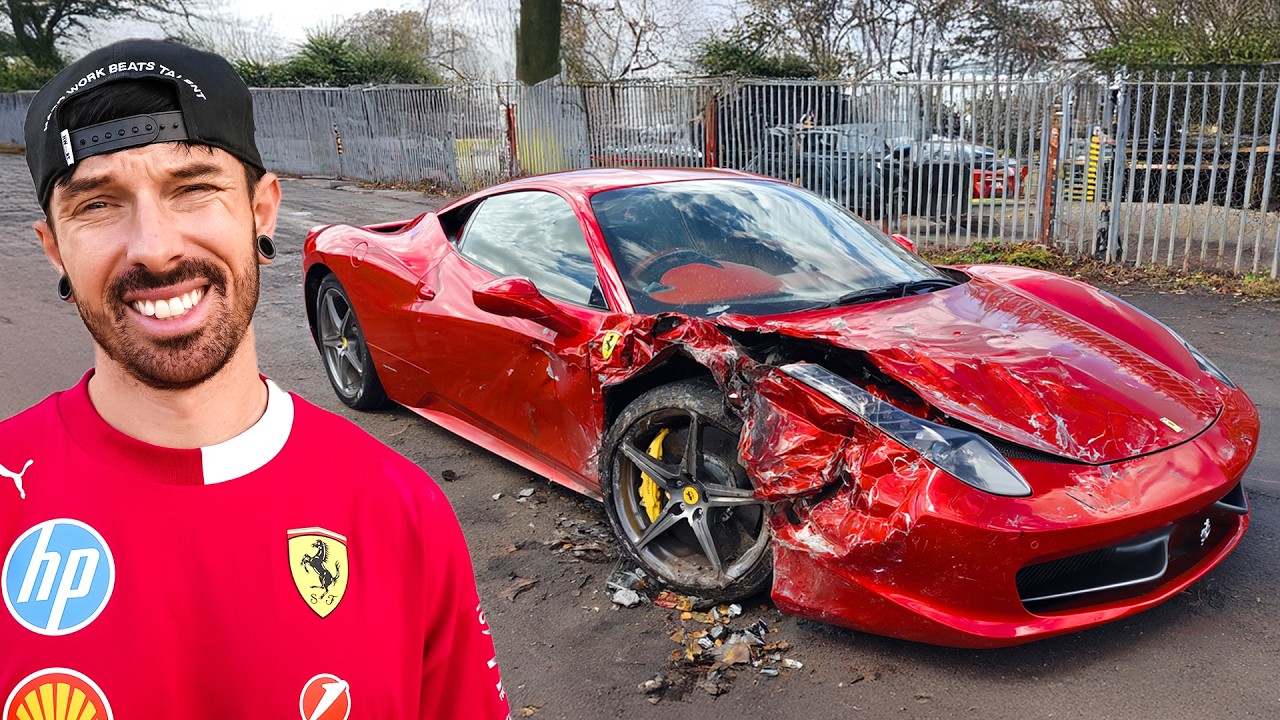
REBUILDING THE CHEAPEST FERRARI 458
0 up · 0 down · 0 ratings
Promos
Grab a Yfood Taster Pack here - use code - MAT-YOUTUBE bit.ly i bought a wrecked Ferrari 458 Spider cheap from auction then attempted to rebuild it in 7 days but i failed. But now i have all the parts i need to be able to finish the rebuild and once its done i wanted to give the car to the Ex Stig for a shake down at the old top gear test track... but things started to go wrong. Thanks to @the-machine-shop for all the welding and bodywork on the build. Thanks to @BenCollinsDrives for breaking the car To grab a valvetronic exhaust visit valvetronic.com
ALL MA MERCHANDISE
Channels and socials
FOR MORE CONTENT
CHECK OUT MY SECOND CHANNEL
Follow Me Here Aswell
Notes
This video follows Mat Armstrong as he undertakes a high stakes rebuild of a wrecked Ferrari 458 Spider with the goal of finishing in seven days, a challenge that quickly tests both resourcefulness and patience. The team starts by reassembling the front end, using aftermarket panels and new hinges, while fighting misalignment and the realization that parts from Ferrari aren’t readily available or perfectly compatible. They continually reassess fitment, swap back to stock components where necessary, and negotiate the complexities of aluminum rear quarter welding with TIG, under Bob's skilled guidance at the machine shop. The front end drama evolves into a broader restoration plan as the rear quarter is welded, primed, and prepared for paint while the team debates the fit of a non-original bonnet and the correct alignment of wings and bumper. In parallel, they address critical engine bay components, including radiators, an air conditioning condenser, and a system to purge air from the cooling circuit using a vacuum filler, highlighting the unique challenges of a front-mounted radiator with the engine in the rear. A key setback occurs when the repaired radiator leaks after a test run, forcing a pivot to an epoxy fix and a race against time to secure a temporary solution while contemplating a second, longer repair window. The exhaust system is overhauled with a Valvetronic setup, and the team weighs the sonic impact against track-day restrictions, experimenting with a back box to balance noise and performance for upcoming testing. As bodywork advances, the bumper, wings, and bonnet alignment are refined, the emblem fitment is completed, and the new side skirts and carbon detailing go on, giving the Ferrari a more complete and aggressive aesthetic. The interior work continues with airbag system diagnostics, seat belt and trim reinstallation, and a window into the meticulous attention needed to restore not just the exterior but the safety systems, which reveals lingering fault codes in the airbag ECU. Finally, the car is wheeled out onto a Top Gear test track for a shake-down with Ben Collins, a high-stakes test of the car’s reliability and performance, and a test of whether all the hard-earned repairs can translate into a credible lap time and a safe drive. The episode ends with a sense of achievement tempered by the reality of remaining mechanical and electrical uncertainties, leaving viewers eager to see the next installment to confirm whether the rebuild can deliver on its ambitious promise. Throughout the build, the team emphasizes practical problem solving, hands-on fabrication, and the iterative nature of restoring a high-performance classic car on a tight schedule, all while delivering the entertainment and personalities fans expect. The overall arc blends hands-on mechanical work with candid failure and persistence, underscoring the collaborative spirit needed to resurrect a damaged exotic into a roadworthy, track-ready machine. By the end, the Ferrari 458 stands as a testament to hobbyist ingenuity and the unpredictable realities of vintage-performance restoration, inviting viewers to follow along for further refinements, sound checks, and potential on-track testing in future episodes.
Topics · autos & vehicles · car restoration · entertainment · drama
Questions answered
- What was the main reason the aftermarket bonnet did not fit, prompting a switch back to the stock bonnet?
- The aftermarket bonnet did not align properly with the wings and bumper, and the stock bonnet, though dented, lined up better with the rest of the panels, so the team decided to use the stock bonnet.
- What happened when they tested the cooling system after the radiator repair, and how did they respond?
- During the test, coolant leaked from the repaired radiator as the system pressurized, indicating the epoxy/zip-tie fix was failing. They then tried another epoxy repair and prepared to install the stock radiator as Ferrari did not have a readily available replacement.
- What was the purpose of the vacuum filler in the cooling system process?
- The vacuum filler was used to remove air from the cooling system, creating negative pressure to ensure there were no air locks so coolant could circulate and the engine reach temperature without leaks.