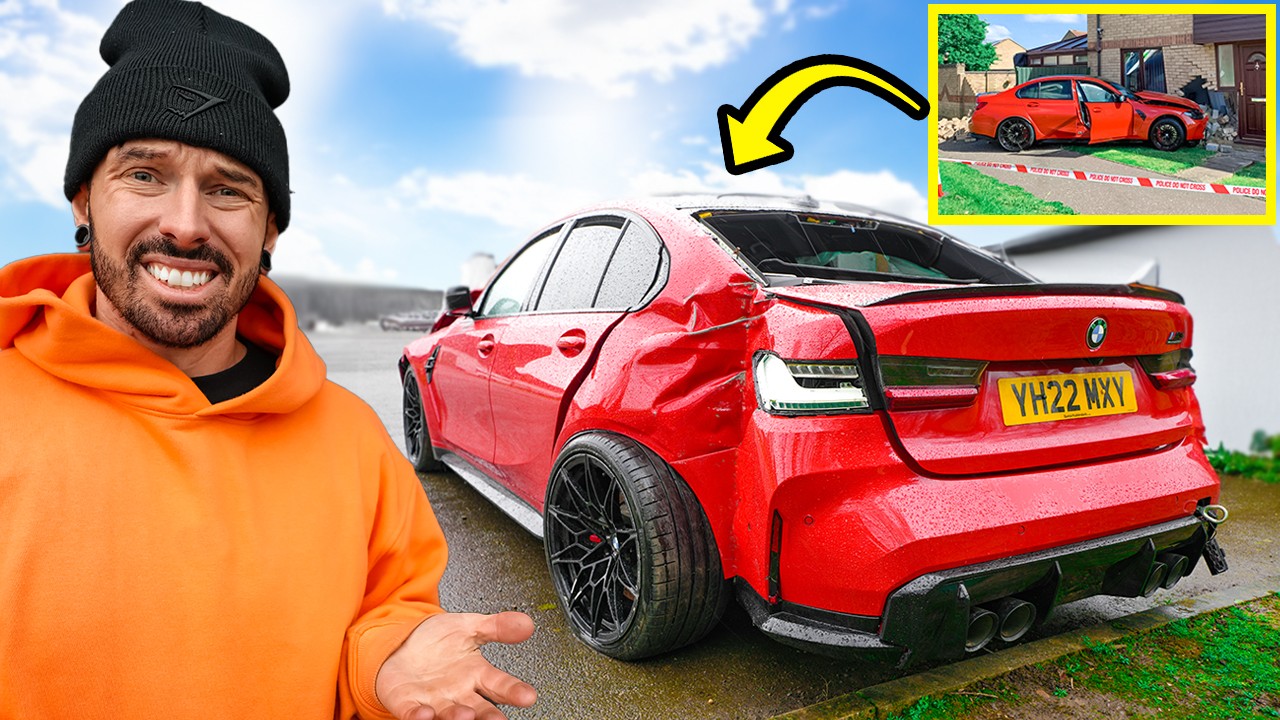
REBUILDING A WRECKED BMW M3 THAT CRASHED INTO A HOUSE
0 up · 0 down · 0 ratings
Description
Grab some Valvoline oil and additives here - valvolineglobal.com “Valvoline the Original Motor Oil. America’s first motor oil brand.” I bought a wrecked BMW M3 G80 that was hit the news articles after it was crashed into the front of a residential house. With the driver being uninsured the car never got as far as the insurance, which left open a good deal to be had & an even bigger repair to be done! THANKS SO MUCH TO AUTOID FOR ALL THE MODS autoid.co THANKS TO KIES FOR THE CARBON STRUT BRACES kiesmotorsports.com GET A BRAND NEW SECOND HAND TEE OR HOODIE HERE - matarmstrong.co.uk
Promos
ALL MA MERCHANDISE
Channels and socials
FOR MORE CONTENT
CHECK OUT MY SECOND CHANNEL
Follow Me Here Aswell
Notes
The video follows a high stakes car rebuild, starting with the decision to buy a wrecked BMW M3 G80 that crashed into a house. The presenter explains the initial assessment: front end damage, interior damage, and significant rear damage, with the goal of determining if the repair is actually feasible before buying any parts. He consults an expert to confirm that the damage can be repaired, and then outlines a plan to strip the car from the front toward the rear to assess the full extent of the damage. The removal of the bonnet hinges, the pedestrian protection system, and the scuttle panel is shown in detail, highlighting how safety systems influence replacement parts. We then see a careful teardown of the front end, including the wing, bumper, headlights, and radiator pack, with emphasis on the need to replace damaged hinges and reassemble new components to restore alignment and safety. A large portion of the mid-video focuses on sourcing parts, including a complete front radiator pack from a breakers yard and the decision to upgrade with a new bumper from Auto ID, which dramatically changes the car’s appearance and potential aerodynamics. The builder tests and troubleshoots electrical connections, cooling hoses, and the bonnet release mechanism, detailing the challenges of fitting a full rad pack and ensuring all sensors and wiring remain intact. After the front end is stabilized, the video shifts to fitting upgraded parts, such as carbon fiber strut braces from Kies, and installing a more aggressive Adro bumper to improve the car’s look and performance. The dashboard removal process is shown in depth, including the stripping of airbags, seat belts, and the center console to access the instrument cluster and HVAC system, followed by careful reassembly with a new dashboard and airbags. The filming then covers the arduous task of installing new rear trailing arms, adjusting toe, and replacing the electronic handbrake system, as well as testing the wheel alignment. Finally, the video demonstrates a complex coolant and oil system restart, including vacuum filling, bleeding air from the cooling system, and pouring coolant with a unique method. The creator closes with a progress tally, noting total spend so far and the car's projected value after completion, while inviting viewers to watch for the final reveal in future installments and share their own opinions on the build.
Topics · car restoration · car modification · autos & vehicles · vehicle safety systems · rebuild series · custom bumper · performance upgrades · engine and cooling systems
Questions answered
- What is the main reason the car was affordable to rebuild despite the crash?
- The driver was uninsured, so there was no insurance payout, making the wreck more affordable for the rebuild.
- Why were new hinges and the pedestrian protection system swapped instead of repaired?
- Because the hinges were bent and the protective system had deployed, making a repair unreliable and potentially unsafe, so new parts were the safer, more predictable option.
- What sourcing strategy helped obtain the necessary front-end parts?
- Buying a complete front rad pack and other components from a breakers yard or used parts suppliers offered a cost-effective solution for assembling a near-factory front end.
- What upgrade components were added to improve the build’s performance and aesthetics?
- A carbon fiber strut brace, an Adro bumper, and upgraded lighting elements were added to enhance appearance and potential performance.
- How did the builder address the airbag system during reassembly?
- Airbags were replaced with new units, and the curtain airbags were installed with new clips, while seat belts were sent to be reset or replaced as needed.