Linus Tech Tips Live Show Archive - March 8, 2013
0 up · 0 down · 0 ratings
Channels and socials
1:21 Folding @Home and Boinc! 3:37 Asus Z87 sneak previews 9:03 islands vs. continents 14:31 Intel branded snowboard 18:12 Elder scrolls online at pax east 27:07 AMD's current position 32:27 Build log of the week 48:20 Infomercial ideas... FEATURING SANDWICHES 51:44 Humble Bundle is awesome 55:02 The forum is getting rack space! And HTC giveaway! 1:02:00 Adventure Time! 1:07:30 Sim City............ :( 1:10:38 Pre-ordering, would you or wouldn't you - and incentives 1:20:02 8350 and 3570k video update 1:26:38 Featured news item - Linus was pretty shook up about this one!
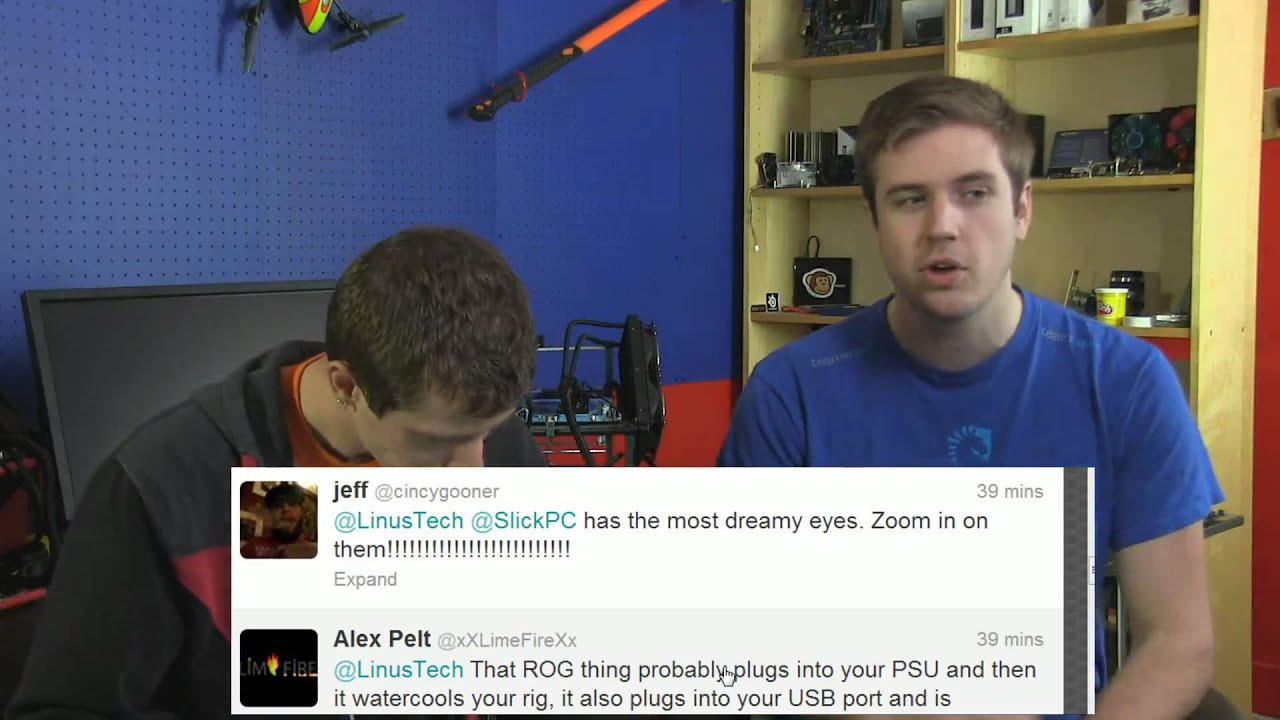
This Linus Tech Tips live show from March 8, 2013 opens with a quick check on streaming quality and audio synchronization, as the hosts restart the setup and ask viewers for feedback on the current feed. They introduce a rapid fire Twitter Q&A segment, where they discuss Folding@Home and BOINC, explaining how distributed computing projects work and why they are powerful for computing protein folding and disease research. The conversation then pivots to hardware previews, including Asus Z87 sneak previews and a debate about thermal armor on Rog boards, with Linus and Slick debating aesthetics, airflow implications, and whether the armor adds functional value. As they switch topics, they tease a new Rog interface and speculate about a potential future Rog video card and a possible proprietary plug, while humorously admitting uncertainty about some of the hardware details. They also discuss the difference between islands and continents in a lighthearted, rambling exchange that showcases their playful chemistry and willingness to tangentially explore odd topics during a live show. The segment on thermal armor returns with a critical look at how it contributes to thermals and airflow, noting that the armor is mostly cosmetic and discussing the cost implications for manufacturers and enthusiasts who might prefer to remove or replace it. The hosts segue into a sponsored segment for Intel, presenting a beanie and snowboard giveaway tied to the purchase of unlocked Intel CPUs, and they acknowledge the playful nature of hardware swag and the potential for consumer confusion about the purpose of such promotions. Viewers are reminded about the ad model and how sponsorships work in YouTube streams, with Linus clarifying that sponsorships will not bias their testing or recommendations, and that he values transparency and candor in all hardware discussions. The Elders Scrolls Online discussion comes up next, with attendees debating its potential direction, immersion, and how it might fit into the Elder Scrolls universe as a third person MMO, driving a broader conversation about core game design versus mass market appeal. They contrast single player RPG immersion with MMO mechanics, debating camera angles, first person versus third person, and how to keep the Elder Scrolls spirit intact while appealing to a broader audience of MMO players. A long exchange about how third person perspective can affect immersion in RPGs leads to a broader dialogue about game design philosophy and what constitutes an authentic Elder Scrolls experience. The hosts then pivot to a featured build of the week, walking through a complex water-cooled rig with block cooling for MOSFETs, multiple radiators, and meticulous tubing routing, praising the build’s aesthetics and functional engineering. They highlight the builder’s color scheme, particularly the blue LED accents and blue components that unify the system’s look, noting that the entire board, PCIe slots, and connections are color coordinated to create a striking visual. The stream continues with a live tour of the build’s desk setup, and Linus and Slick marvel at the level of detail, from sleeved cables to the clean routing, while joking about how such builds attract attention and admiration from the community. A live segment covers the forum community and the “build log of the week,” emphasizing the active, collaborative environment of Linus Tech Tips, where viewers post their rigs for feedback and improvement ideas, and the hosts celebrate the forum’s role in driving community knowledge sharing. They welcome a shift toward YouTube network partnerships, explaining how Twitch.tv and a new network will influence distribution, ads, and audience reach while stressing that content integrity and editorial independence will remain intact. The discussion on networks covers how ad insertion will work, with sponsorships clearly separated from core testing and recommendations, ensuring viewers understand where ads come from and that the team remains transparent. The hosts reassure the audience that their content methodology, including overclocking records, test benches, and benchmarking procedures, will stay visible and reproducible, underscoring a commitment to openness in performance testing. They move into audience tweets again, with questions about using hardware like the Intel snowboard as a test bench, and humorous speculation about its practical uses, such as wall display or actual snowboarding demonstrations. A significant portion of the conversation pivots back to Elder Scrolls Online, where viewers challenge assumptions about MMO design, immersion, and the risk of diverging too far from traditional Elder Scrolls gameplay, with debates about first person immersion versus third person MMO mechanics. They explore how an Elder Scrolls MMO might balance accessibility for new players with core fans’ expectations, including discussion of how to maintain lore, world design, and the single player feel within a multiplayer framework. The show transitions to practical hardware talk, including graphics card recommendations, never settle driver impacts, and the evolving AMD vs Nvidia performance landscape, with emphasis on price-for-performance tiers and bundled games as incentives. They discuss historical trends in GPU benchmarking, the importance of context when evaluating game performance, and the value of hands-on testing across multiple titles to guide real-world purchases. The featured partnership segment revisits Seagate and workstation demands, with the hosts sharing a behind the scenes look at production workflows, memory upgrades, and the need for reliable storage and memory capacity for professional applications like DaVinci Resolve and Premiere. The episode wraps darkly with a discussion of streaming infrastructure, ad pacing, and the community’s reception to new formats, ending on a lighter note with fan interactions about Adventure Time, Norwegian comments, and audience appreciation for the show’s longevity, humor, and practical tech insights. Finally, Linus closes with thanks to viewers, recaps the key themes of the night, and teases upcoming topics, including more build showcases, GPU head-to-heads, and potential gear giveaways, inviting continued engagement from the community through forums and social media channels.
Topics · technology · hardware · live_stream · pc_builds · gaming · community_discussion · gpu_benchmarks · overclocking
Questions answered
- What is Folding@Home and why is it promoted on the show?
- Folding@Home is a distributed computing project that uses many computers to simulate protein folding, which helps study diseases and biology. The hosts explain its potential to contribute to research and why the Linus Tech Tips Folding@Home team is participating.
- What is the purpose of the Intel promotion during the stream?
- The Intel promotion offers a free beanie and a chance to win an Intel branded snowboard with the purchase of unlocked Intel CPUs, targeted at Canadian and US customers, with details on IntelGamingPromo.com.
- What is the featured build of the week about?
- The featured build of the week showcases a high-end water-cooled rig with a MAXIMUS V Formula motherboard, multiple radiators, and intricate tubing routing, emphasizing both aesthetics and functional engineering.
- How does the hosts view the Elder Scrolls Online rumors and design direction?
- They debate the balance between immersion and accessibility, discuss potential third-person MMO mechanics vs first-person RPG feel, and consider how to maintain Elder Scrolls identity while appealing to MMO players.