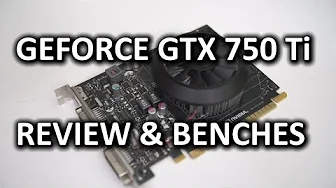
GeForce GTX 750 Ti NVIDIA & ASUS Designs
0 up · 0 down · 0 ratings
Channels and socials
Our review of the GTX 750 Ti actually includes TWO cards. We've got a reference design card from NVIDIA designed for maximum compatibility and we've got a non-reference one from ASUS designed for maximum performance (spoiler alert). Sponsor link: linustechtips.com Pricing & discussion: linustechtips.com Graphics card overclocking master sheet: docs.google.com Join our community forum: bit.ly twitter.com @LinusTech Intro Screen Music Credit: Adhesive Wombat -
Check out his channel here: youtube.com Outtro Screen Music Credit: Approaching Nirvana - Sugar High youtube.com
The GeForce GTX 750 Ti NVIDIA & ASUS Designs video provides a detailed, side-by-side look at two GTX 750 Ti implementations to illustrate how Nvidia’s Maxwell architecture delivers improved performance per watt and enables a compact, low-power design. The host explains that the Maxwell-based 750 Ti achieves a roughly 35% gain in performance per core thanks to smaller control logic blocks that manage 32 cores each, allowing 640 CUDA cores total to run on a 60W TDP. He highlights that this efficiency unlocks a 4x improvement over older generations and explains the practical implications, such as the card requiring no six-pin power connector in the reference design and fitting into almost any PC with a PCI Express slot. The discussion emphasizes the targeted audience for the card: tier-1 PC upgraders, small form factor enthusiasts, and users upgrading from older GPUs like the 550 Ti who want solid 1080p performance without maxed-out settings. The video then contrasts Nvidia’s reference design against ASUS’s non-reference model, noting the ASUS card’s additional power connector, higher stock clocks, improved IO layout, and a superior cooler and PCB design built with ASUS’s SAP (super alloy power components) philosophy. The host promises heavy emphasis on overclocking potential, showing how the ASUS card benefits from extra power headroom to reach higher clocks and performance, while still presenting the reference card as an easy, ultra-compact option for broad compatibility. Real-world tests on Far Cry 3 and Bioshock Infinite are used to demonstrate the performance gap between the two cards, with the ASUS variant clearly pulling ahead when the power budget allows. The video also points viewers to an overclocking sheet in the description for exact settings and invites viewers to explore more about Nvidia technologies like G-Sync and ShadowPlay, while noting that neither card in this comparison currently supports G-Sync due to display port limitations. In closing, the host encourages viewer engagement and teases the potential for future 750 Ti variants with more robust power delivery, while stressing the card’s suitability for easy, high-framerate 1080p gaming in budget or compact builds.
Topics · technology · hardware · computing · video_games
Questions answered
- What are the two GTX 750 Ti designs compared in the video?
- The video compares Nvidia's reference design GTX 750 Ti and ASUS's non-reference design GTX 750 Ti, highlighting differences in cooling, power delivery, and clock speeds.
- What is the key architectural improvement of Maxwell discussed in the video?
- Maxwell uses smaller control logic blocks for 32 cores each, improving efficiency per core and delivering about 35% better performance per watt.