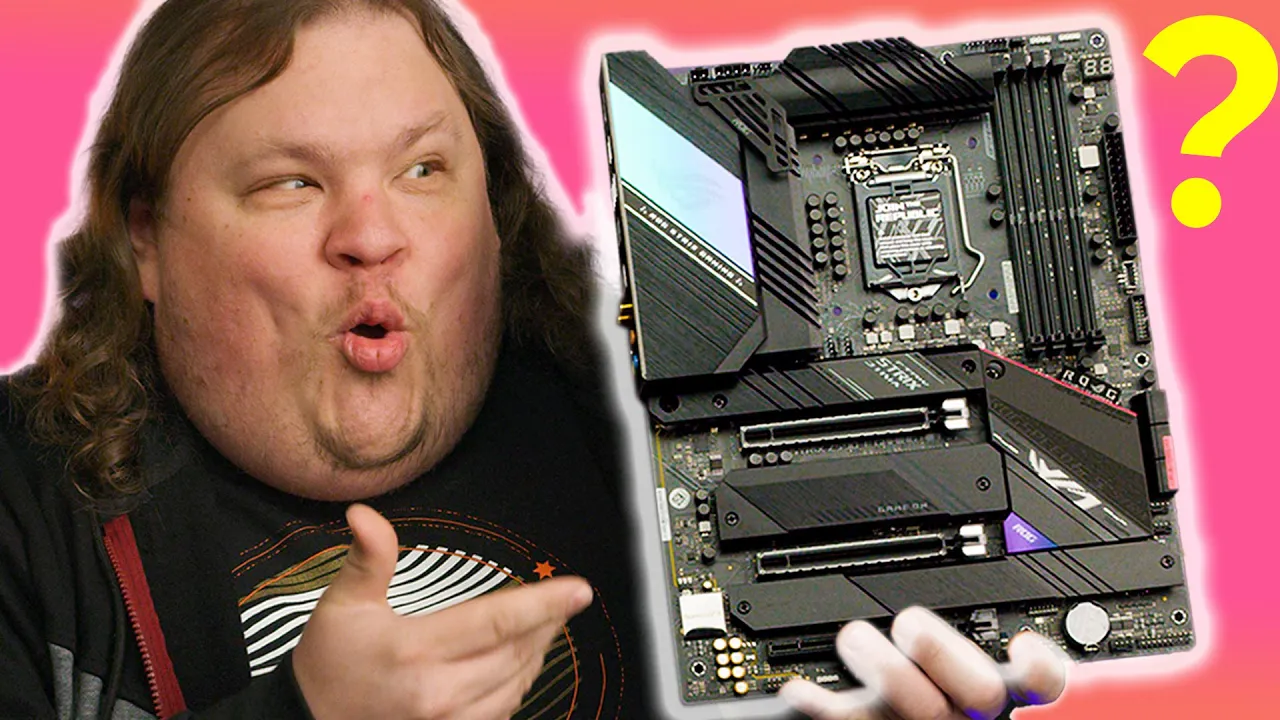
How Motherboards Work - Turbo Nerd Edition
0 up · 0 down · 0 ratings
Promos
Check out the Essential Electronics toolkit at: ifixit.com Linus was on vacation and we went full nerd. Buy ASUS ROG Strix X570-E Motherboard on Amazon: geni.us Buy AORUS Z490 Master on Amazon: geni.us Purchases made through some store links may provide some compensation to Linus Media Group. Discuss on the forum: linustechtips.com ► GET MERCH: lttstore.com ► AFFILIATES, SPONSORS & REFERRALS: lmg.gg ► PODCAST GEAR: lmg.gg ► SUPPORT US ON FLOATPLANE: floatplane.com FOLLOW US ELSEWHERE --------------------------------------------------- Twitter: twitter.com Facebook: @LinusTech Instagram: @linustech TikTok: @linustech Twitch: twitch.tv MUSIC CREDIT --------------------------------------------------- Intro: Laszlo - Supernova Video Link: youtube.com iTunes Download Link: itunes.apple.com Artist Link: soundcloud.com Outro: Approaching Nirvana - Sugar High Video Link: youtube.com Listen on Spotify: spoti.fi Artist Link: youtube.com Intro animation by MBarek Abdelwassaa @mbarek_abdel Monitor And Keyboard by vadimmihalkevich / CC BY 4.0 geni.us Mechanical RGB Keyboard by BigBrotherECE / CC BY 4.0 geni.us Mouse Gamer free Model By Oscar Creativo / CC BY 4.0 geni.us
How Motherboards Work - Turbo Nerd Edition digs into the core ideas that power a modern PC motherboard, starting with how power becomes usable for the CPU. The video explains the role of voltage regulation modules, or VRMs, showing how MOSFET switches, an inductor, and a diode shape 12-volt input into about 1.2 volts for the CPU. It emphasizes the importance of switching speed versus the number of phases: faster switching alone generates heat, so adding more phases distributes current and reduces stress on each component, enabling cleaner power delivery. The segment then connects power delivery to system stability, noting how too much voltage ripple can hurt performance and how multiple VRM phases help manage that ripple more evenly. Through this, the host also covers how RAM and CPU exchange signals, why memory channels matter, and how the CPU’s memory controller limits practical RAM speeds. The discussion continues with PCIe signaling, latencies, and the impact of board design choices like chipset placement and direct CPU connectivity, underscoring how PCB layer count and trace quality enable high-speed interfaces. Finally, the video reflects on value versus perceived value in motherboard design, highlighting trade-offs like extra heat sinks or luxury features that don’t always translate into real-world gains, and it invites viewers to imagine future designs that balance cost with performance more effectively.
Topics · computer hardware · science & technology · education · technology analysis
Questions answered
- Why does increasing the number of VRM phases improve power delivery efficiency?
- More VRM phases divide the current among multiple, smaller regulators, reducing heat per phase and improving stability; this allows delivering higher current with lower thermal stress and better transient response.
- What is the difference between RAM speed labels and actual data transfers in DDR memory?
- RAM is labeled by its data rate, but transfers occur on both the rising and falling edges of the clock, so the effective transfer rate is doubled, resulting in real utilization that can be about half the labeled megahertz.
- Why do some motherboards with four RAM slots use different topologies like T topology or Daisy chaining?
- Topology determines trace lengths to each RAM slot; T topology keeps lengths equal for better high-speed performance, while Daisy chaining is simpler but can reduce peak speeds when all slots are populated.